McKenzie defends Sithole after Bafana red card controversy in World Cup opener
The opening night of South Africa’s World Cup campaign was supposed to be a statement of intent. Instead, it has become a moment of scrutiny, anger and public pressure, with midfielder Siphephelo “Yaya” Sithole at the centre of a storm that has spilled far beyond the pitch.
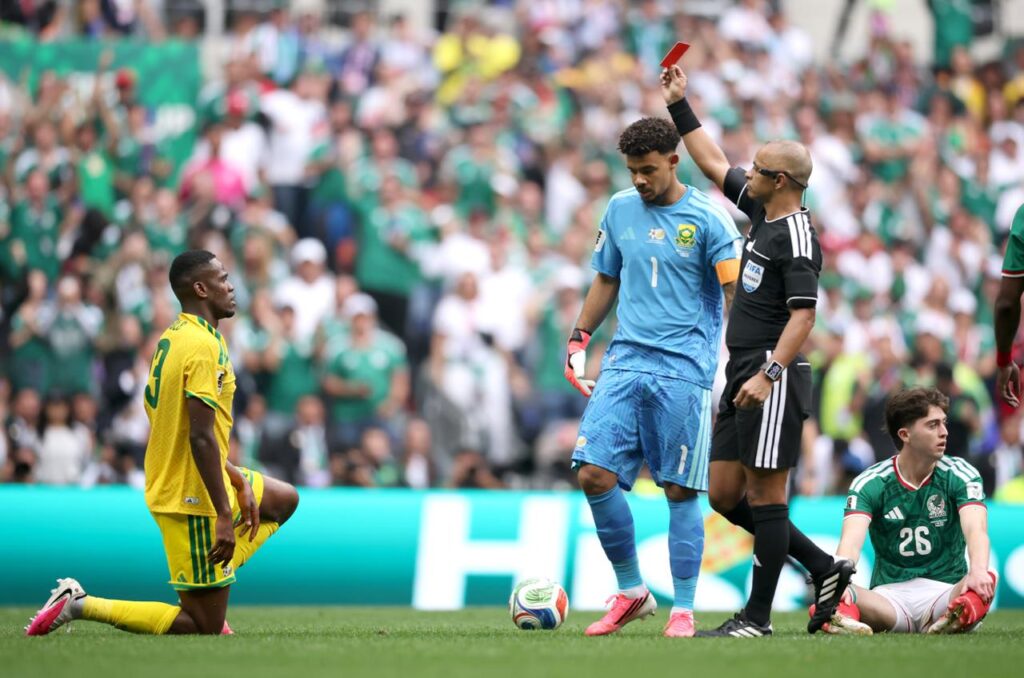
Following a 2-0 defeat to Mexico in their tournament opener, Sithole has endured a wave of criticism after a costly early mistake allowed Julian Quiñones to break the deadlock. Matters worsened in the second half when he was shown a red card, reducing Bafana Bafana to ten men at a critical stage of the match.
Within hours, social media timelines were flooded with harsh reactions, with the 25-year-old midfielder singled out by frustrated supporters. The intensity of the backlash quickly raised concerns about the growing culture of online abuse directed at players under pressure.
In a rare and direct intervention, Sports Minister Gayton McKenzie stepped in publicly to defend the player, urging supporters to view the defeat through the lens of collective responsibility rather than individual blame.
“This is not a tennis match, football is played by a team. We win as a team and we lose as a team,” McKenzie wrote on X.
“Don’t blame yourself, Yaya. It wasn’t your best game ever, but you fought for the team. We are grateful to all our players. Come back stronger, son.”
His message struck a softer tone amid a rapidly escalating national debate over accountability, performance pressure and the emotional toll placed on young athletes representing South Africa on football’s biggest stage.
For Sithole, the timing could hardly be more unforgiving. A World Cup debut is often a career-defining moment, but his has instead been marked by two decisive incidents that shaped the outcome of the match and shifted public attention squarely onto him.
Within the camp, attention has already turned to damage control and recovery. Bafana Bafana now face Czechia in a match that carries early elimination stakes. With no margin for error remaining, the pressure is no longer theoretical. It is immediate and unforgiving.
The defeat to Mexico has left South Africa’s tournament hopes hanging by a thread. A second setback would all but end their ambitions of progressing, turning what was meant to be a journey of belief into an early and painful exit.
As criticism swirls online, McKenzie’s intervention has reframed the conversation, at least in part, around unity and resilience. But on the pitch, the response will need to come quickly, and decisively.