
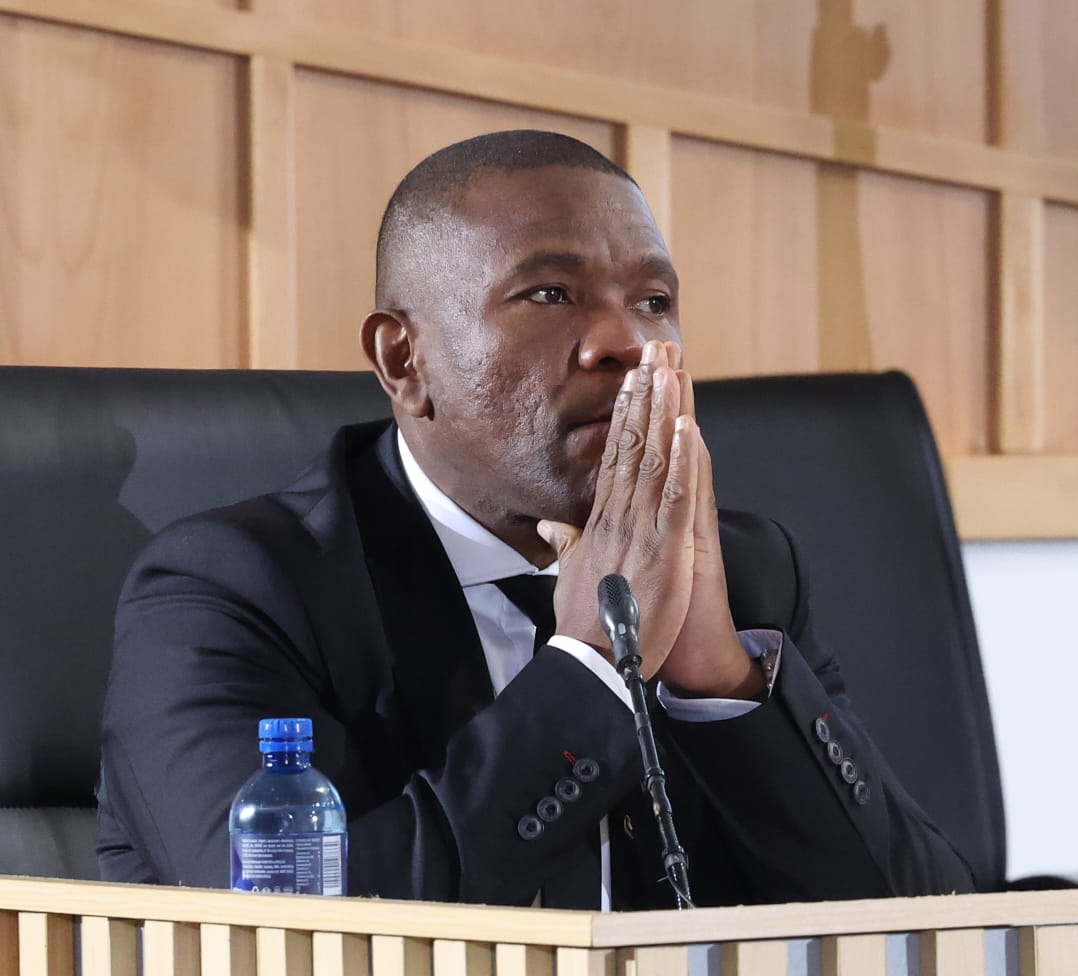
Public hearings of the Madlanga Commission of Inquiry officially commenced in Pretoria on 17 September 2025 with opening testimony that immediately defined the scope and seriousness of the inquiry.
Day 1 centred on Lieutenant-General Nhlanhla Mkhwanazi, whose earlier public allegations led to the establishment of the commission. His testimony placed institutional context, timelines and alleged patterns of political interference and criminal infiltration before the commission.
The inquiry is tasked with determining whether South Africa’s criminal justice system has been compromised through corruption, political influence and organised crime.
Opening submissions stressed impartiality, noting that the commission does not presume the truth or falsity of any allegation. All claims will be tested through sworn evidence, with implicated individuals afforded the right to respond. The commission further warned that obstruction of its work constitutes a criminal offence under the Commissions Act.
Mkhwanazi confirmed under oath that he had prepared and submitted a detailed written statement supported by annexures, which were formally admitted into evidence. He outlined his SAPS career before addressing the substance of the allegations that led to his July 2025 media briefing.
He explained that his public statements were based on investigative patterns, intelligence assessments and operational experience rather than speculation.
A significant portion of Day 1 focused on the Political Killings Task Team. Mkhwanazi traced its origins to earlier interventions in KwaZulu-Natal, explaining how political violence necessitated a specialised, multidisciplinary unit. The task team later expanded nationally as links between political violence and organised crime emerged.
The commission was presented with a timeline of material events, including the handling of more than 120 investigation dockets, arrests linked to high-profile cases, internal SAPS decisions affecting intelligence leadership, and the cancellation of contracts tied to politically exposed individuals.
Cellphone records obtained during arrests were said to reveal communication patterns suggesting possible political and institutional interference in investigations.
Mkhwanazi further testified that investigators experienced intimidation, unexplained engagements by senior officials and interference with forensic processes. Some investigators were allegedly offered inducements not to oppose bail applications, while others reported threats connected to individuals with links inside SAPS.
The commission acknowledged that certain evidence may initially appear hearsay but confirmed it would be tested through corroborating witnesses and documentation.
Day 1 concluded with the commission outlining a phased approach. The first phase will focus on detailed evidence from Mkhwanazi, followed by testimony from senior police officials, task team members, prosecutors and expert witnesses.
Transparency was reaffirmed as the default position, with limited closed sessions only where necessary to protect ongoing investigations.