
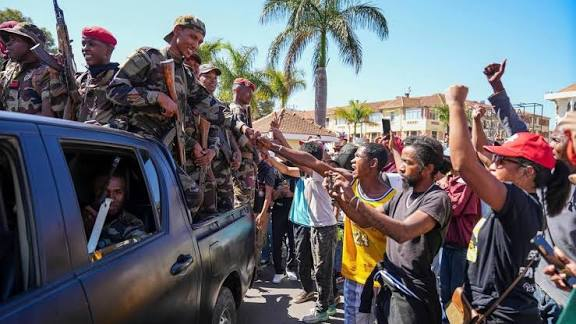
Tensions in Madagascar have reached a critical point after President Andry Rajoelina claimed a coup attempt was underway, following scenes of soldiers joining anti-government protesters in the capital, Antananarivo.
On Sunday, military personnel were seen standing alongside jubilant demonstrators, many of whom cheered their presence. The show of unity between protesters and segments of the military came just hours after the president’s office warned of an “illegal attempt to seize power by force.”
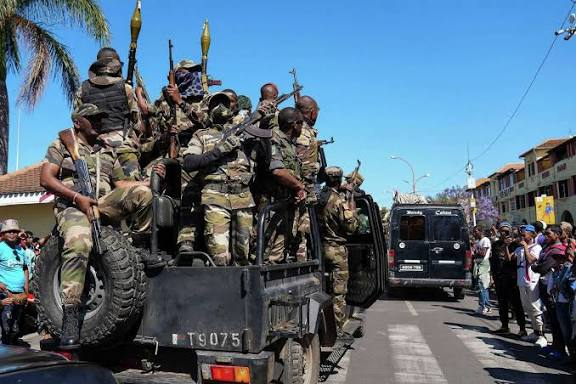
Despite the heavy security presence, the day ended without immediate violence, though uncertainty remains over where the loyalty of the armed forces truly lies.
The unrest began on September 25 as youth-led demonstrations under the banner “Gen Z Madagascar,” initially protesting power and water shortages. The movement quickly evolved into a broader demand for an end to corruption, nepotism, and the rising cost of living. According to the UN, at least 22 people have died since the protests began, though the government disputes this figure.
The situation evokes memories of 2009, when Rajoelina first came to power through a military-backed coup led by the same CAPSAT unit whose current commander now claims control of the army.
Attempts to stabilize the crisis—including the president’s decision to dissolve his cabinet and appoint a military general as prime minister—have failed to calm the nation. With youth movements gaining strength and public anger mounting, many fear that Madagascar may once again be on the brink of a political collapse.