
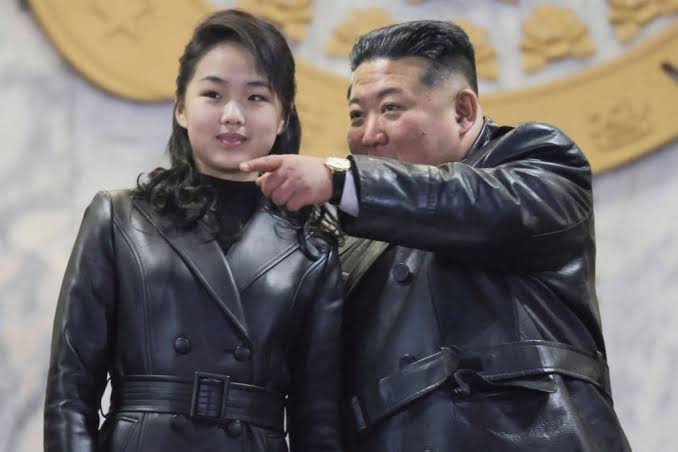
North Korea’s leader, Kim Jong Un, made a strong commitment to ramp up his country’s nuclear weapons program on Wednesday, right before overseeing a lively nighttime military parade alongside his daughter.
Around 14,000 troops paraded through Kim Il Sung Square in Pyongyang, marching in precise goose-step formations under bright lights, with fighter jets zooming above.
Kim’s teenage daughter, thought to be named Ju Ae, was right there with him, standing out at the event. Even though there’s been talk in South Korea about her possibly being prepared to take over one day, no new titles were mentioned as the ruling party’s big congress, which happens every five years, came to a close.
In his final words at the congress, Kim emphasized the party’s determination to build up nuclear strength, aiming to grow the arsenal and improve ways to launch them.
But the parade itself was pretty low-key on the hardware side—no tanks rolling by, no massive intercontinental ballistic missiles, no fancy hypersonic weapons, and no big launchers on display.
This is interesting because North Korea usually loves showing off its scariest gear at these events, and lately, their media has been full of weapon pics.
Just last week, footage showed Kim seemingly driving a huge 600mm multiple rocket launcher, which they’ve called nuclear-ready, with tons of them lined up. And only four months back, they had a giant parade in the rain for the party’s 80th anniversary, flaunting their top ICBMs and other advanced stuff.
This ninth congress of the Workers’ Party, where the country’s top folks gather to approve plans, also shook up some leadership roles.
Kim’s influential sister, Kim Yo Jong, got a promotion to head a party department after being a deputy for years, locking in her spot in the core group. A bunch of high-level party and military jobs got reshuffled, bringing in younger, loyal people, while Kim was unanimously reelected as general secretary for another five years.
So, why tone down the military show this time? Parades are pricey and tricky to pull off, especially if you’re unveiling new tech. Rolling out the same missiles so soon after a big event might not pack the same punch.
But looking bigger picture, it seems like Pyongyang is showing restraint and control, saving their big cards for later.
Along with the nuclear push, Kim talked about beefing up ICBMs, submarine launches, drones, and even AI tech.
He also left a door open for talks with the US, but only if they play by North Korea’s rules. Better relations hinge on America’s approach, he said, meaning they’d have to accept North Korea’s nukes and drop what the regime calls hostile moves.
This comes as US President Donald Trump gears up for a trip to China from March 31 to April 2, which could shake up things in the region. Some experts think it might spark a chance for Trump and Kim to chat again, maybe directly or through China.
Trump didn’t bring up North Korea in his State of the Union speech, which is odd since he talked about it a lot in his first term, especially around those summits with Kim.
He did honor a 100-year-old Korean War vet, giving former fighter pilot Royce Williams the Medal of Honor to cheers from both sides. It highlighted the war’s lasting impact, even if current tensions weren’t mentioned.
North Korea’s edge has changed since those early Trump days, thanks to Kim’s tightening ties with Russia’s Vladimir Putin.
They signed a big strategic partnership deal in June 2024, including mutual defense, basically making them allies. This has gotten deeper with North Korea helping in Russia’s Ukraine war, which is now a big part of their home messaging.
Media has shown Kim welcoming back soldiers who fought for Russia and supporting families of the fallen, often in touching scenes where he’s like a caring leader. This month, he even gave new homes to some of those families.
With all that, the parade focusing on troops over weapons might be tailored for folks at home—stressing unity, loyalty, and preparedness without flashing the big guns.
Still, the message to outsiders was clear: Any threat to their sovereignty would mean quick strikes back. This warning hit as the US and South Korea said their joint military exercises, maybe scaled back, are coming next month.