
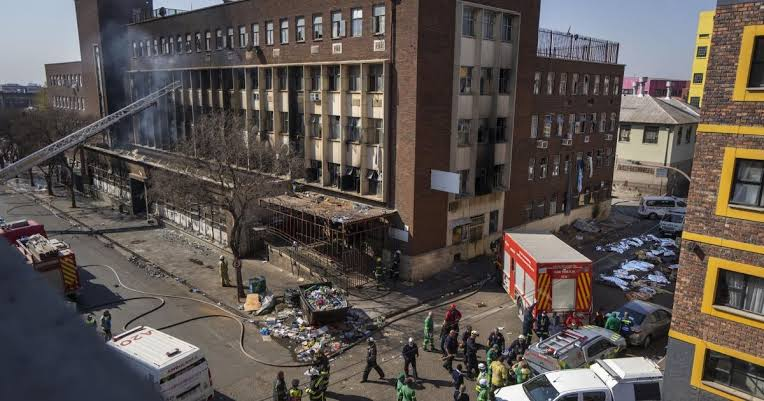
Two years after the devastating blaze that tore through the Usindiso building in Marshalltown, survivors are still waiting for permanent housing. The fire, which claimed 77 lives in August 2023, remains one of Johannesburg’s most painful reminders of poverty and inequality in the city.
A government commission of inquiry has since revealed that the tragedy was not just the result of one man’s actions, but of a much deeper problem—Johannesburg’s chronic housing crisis. According to the findings, extreme poverty and a severe shortage of affordable homes left vulnerable families living in unsafe, overcrowded buildings with little to no fire protection.
The commission inspected more than 100 inner-city properties and found that nearly 80% had serious fire-safety risks, while most lacked running water, electricity, or waste removal. Makeshift partitions of wood and fabric, blocked fire escapes, and no firefighting equipment turned these buildings into deadly traps.
The popular belief that “hijacked buildings” were the main issue was also challenged. In reality, only about 5% of the properties showed signs of rent being illegally collected by non-owners. The bigger problem, investigators concluded, was the absence of basic services and the city’s failure to prioritize housing for the poor.
One man is currently on trial for allegedly starting the blaze, but survivors and activists insist the deeper issue lies in decades of government neglect. They argue that unless Johannesburg invests in affordable housing and provides proper services like electricity, water, and sanitation, more lives will be at risk.
The commission recommended urgent reforms: a plan to expand social housing, faster processes for relocation, and less red tape for developers willing to build safe, low-cost homes. But survivors—still living in temporary shelters two years later—say promises mean little without real action.
For many families who lost loved ones in the Usindiso fire, the wait for dignity and safety continues.