
By Khabonina Mdokwe
Student leadership is the heartbeat of campus democracy, where vision meets action and voices shape the future.
This week the Durban University of Technology (DUT) held their Student Representative Council (SRC) elections.
The institution continues to face longstanding challenges, including concerns around the condition of some student residences. In addition, several students did not receive their National Student Financial Aid Scheme (NSFAS) monthly allowances this year, reportedly due to delays in submitting registration details to NSFAS.
Students from institutions of higher education face a plethora of challenges starting from securing their spots to navigating issues around accommodation and funding. In the context of elections, engaging with representatives from various political organisations and understanding their manifestos can help students make informed choices during SRC elections.
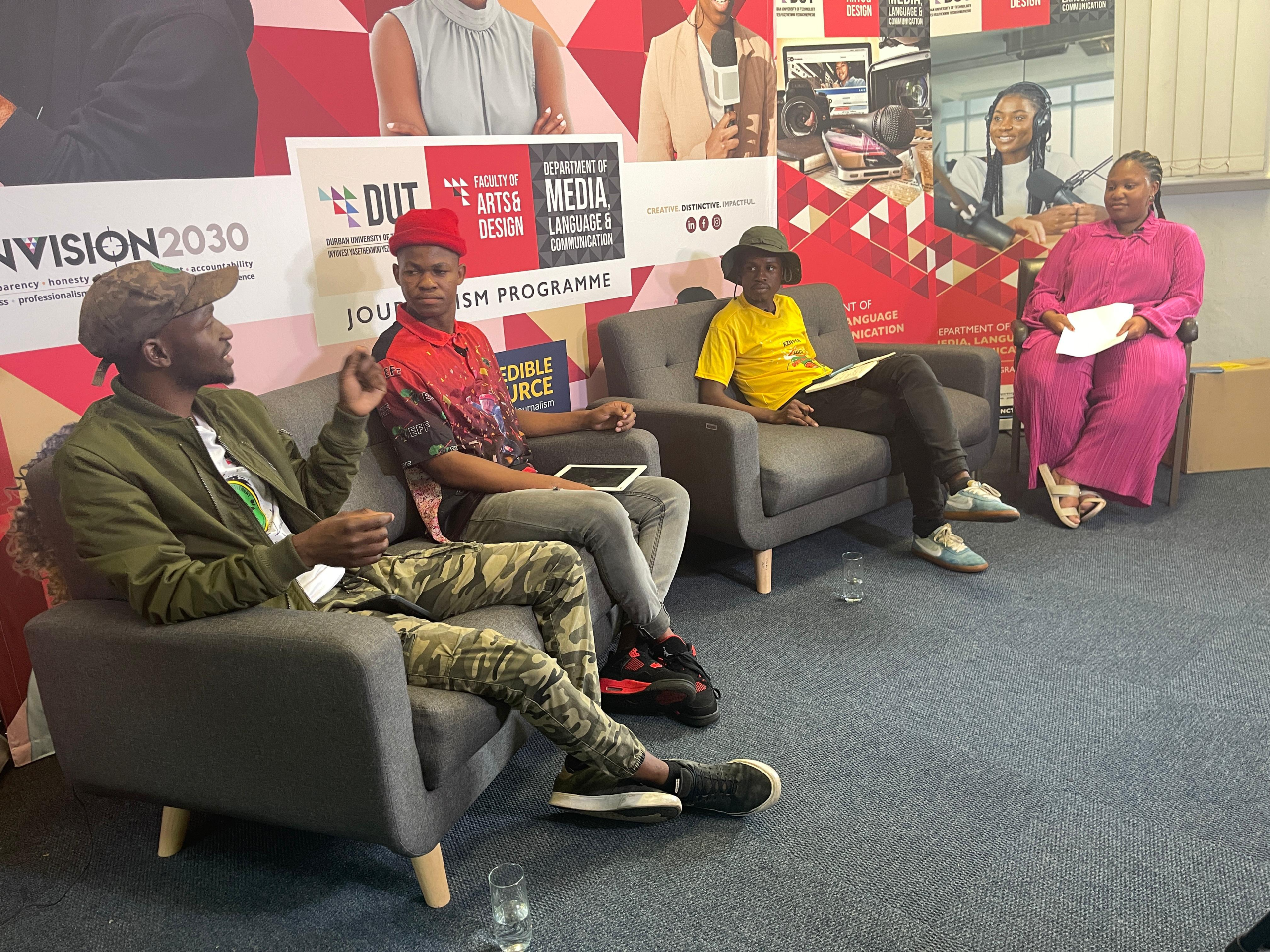
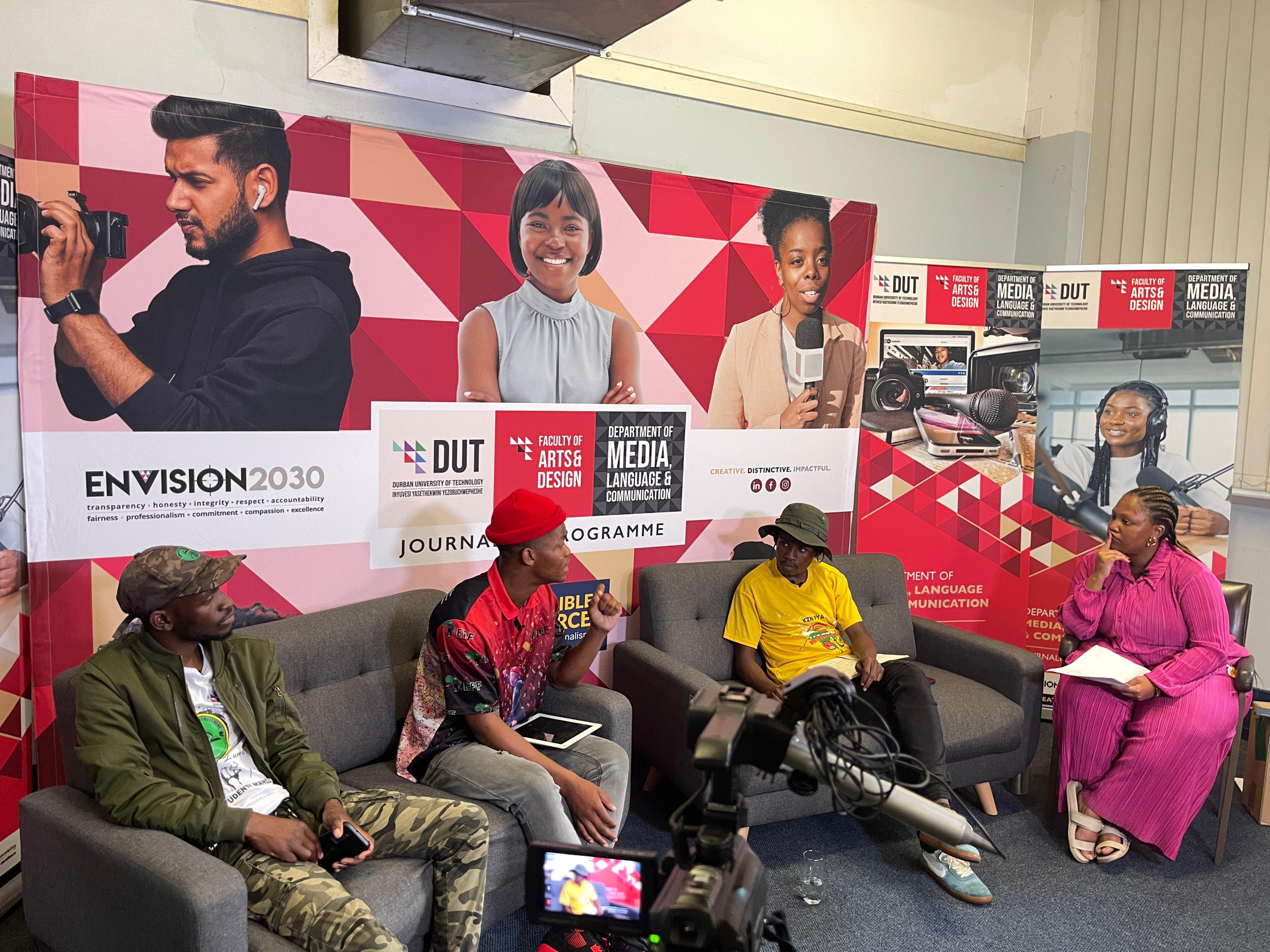
The South African Conversation by DUT Journalism podcast held a pre-election discussion between the Economic Freedom Fighters Student Command (EFFSC), uMkhonto weSizwe Students’ Movement (MKSM) and the South African Students’ Congress (SASCO) representatives to delve into why they are running for SRC, what student leadership means to them and to hear more about how they plan to bring their manifestos to reality.
“As the EFF members, when we signed the membership, we committed ourselves to serve, suffer and sacrifice for all the students’ issues,” said Sthandwa “Wise” Ndlovu, EFFYC (DUT) Chairperson.
The basis of student politics is advocacy, giving students a voice and promote change on campus.
> “Running for SRC doesn’t start with having interest in contesting the elections, but it starts win the challenges that you face as a student within the institution. We need dedicated leadership who will have different ideas to resolve student issues because we also need to be at a level whereby we change the system that is oppressing us. We need to come with new ideas because they have mastered dealing with students in a way that allows them to get away without addressing those issues,” stated Enerst Manogara, uMkhonto weSizwe Student Movement (DUT) Chairperson.
Despite their different views, all candidates share a focus on advocacy, highlighting why student politics matter. As the SRC elections come to an end, the spotlight remains on student leadership as a vital force for representation and reform.