
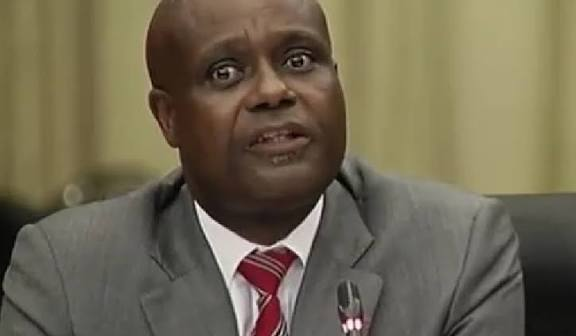
CHAUKE’S OPENING STATEMENT
INTRODUCTION
1 Chairperson, this enquiry concerns allegations made against Adv Andrew Chauke, a career prosecutor and the Director of Public Prosecutions for South Gauteng. He denies each of the charges. They are unfounded in fact, unsustainable in law. They are based on confusion of what Mr Chauke actually decided, what he was empowered to decide, and what the courts have already pronounced upon.
2 Two preliminary matters must be made clear at the outset.
3 First, Adv Chauke is not accused of dishonesty, corruption, ulterior motive, personal benefit, or any dereliction of ethical duty. The allegations relate solely to two prosecutorial decisions taken more than a decade ago in the Booysen and Mdluli matters. In the Booysen matter, he is not charged for authorising racketeering charges—that decision was made by the Acting NDPP, Adv Nomgcobo Jiba—but merely for supporting it. In the Mdluli matter, he is not charged for deciding that murder charges should never be brought, but for withdrawing them pending an inquest in terms of statute. Both allegations are vague and embarrassing and do not disclose misconduct on his part.
4 Second, the case now advanced against him rests on legal and factual premises that have already been overtaken by judicial authority. The criticisms directed at the Booysen authorisation are traceable to the judgment of Gorven J—not to the facts, not to the dockets, and not to the law. A Full Court of the Gauteng Division has since examined the very evidence before the NDPP, the very statements relied upon, and the exact allegations of “no evidence”, “mendacity”, and “irrationality”. It rejected them. It held that the evidence did implicate Booysen, that reliance on hearsay was lawful, that the factual premise of the review was incorrect, and that no case of mala fides or impropriety had been established. In that Court’s words: “I cannot find any mala fides and or ulterior motive in the authorisation… POCA requires the freedom and space to be given to the members of the prosecuting authority… Anything short of this… ought to be based on very cogent, serious and exceptional circumstances.” GCB v Jiba and Others 2017 (2) SA 122 (GP) at para 67
5 And, critically for this Enquiry: “[68] It suffices for now to conclude on Booysen matter by stating that no case has been made for removal or suspension from the roll of advocates. I now turn to deal with the other matter and basis of complaints thereto against Jiba.”
6 It is that same decision—found not to constitute misconduct for the actual decision-maker—that Adv Chauke is accused of supporting. That cannot be a basis for disciplinary sanction.
7 Similarly, the charge relating to the Mdluli matter proceeds on the premise that the withdrawal of the murder charge and the subsequent delay were irrational. Yet the Supreme Court of Appeal has already held that the withdrawal and inquest decision was rational; that later events were not before the review court; and that one cannot retroactively invalidate a lawful decision by relying on criticisms of conduct occurring months afterward. That judgment, together with the independent review later undertaken by NDPP Nxasana, should end the matter.
8 Chairperson, this enquiry is convened under section 12(6) of the NPA Act. Section 179(4) of the Constitution requires that prosecutors act “without fear, favour or prejudice”. That constitutional imperative protects not only the institution, but the individual prosecutor exercising specialised judgment under conditions of pressure and controversy. If prosecutors are to fear that decisions taken in good faith—years earlier, and upheld by appellate courts—may later be used as grounds for suspension and removal, the chilling effect on prosecutorial independence will be acute and immediate.
9 It is against this backdrop that we will, in due course, lead the evidence of Mr Mxolisi Nxasana, Adv Laurence Hodes SC, Adv Sello Maema, Adv Silas Ramaite, and Adv Gerrie Nel—all of whom were directly involved in the events now under scrutiny. They will demonstrate that the decisions in issue were lawful, rational, and grounded in proper prosecutorial principle; that Adv Chauke acted within the limits of his authority; and that nothing about his conduct remotely approaches misconduct.
10 This opening statement will therefore proceed in four parts:
10.1 The correct legal standard for a section 12(6) enquiry;
10.2 The improper expansion of the case beyond the Terms of Reference;
10.3 The evidence and law relating to the Booysen matter; and
10.4 The evidence and law relating to the Mdluli matter.
11 At the end of this process, we submit, the Panel will have no difficulty concluding that none of the charges against Adv Chauke are substantiated, and that they do not meet the constitutional threshold for suspension or removal.
THE LEGAL STANDARD GOVERNING THIS ENQUIRY
12 At the outset we must refer to section 179(4) of the Constitution. That section requires legislation to be passed to guarantee that the NPA should act “without fear, favour or prejudice”. This is not just about the institution. It is also about individual prosecutors who make decisions to prosecute or to decline to prosecute. If they fear that one day a member of the executive will suspend them, and subject them to disciplinary enquiry because they have made a prosecutorial decision, in good faith, that will have a choking and chilling effect in the discharge of their duties as prosecutors.
13 The threshold question in any enquiry into prosecutorial fitness is what legal standard governs both the nature of the charges and the manner in which the Panel must assess them. It is the constitutional backbone of the entire process, because, unlike most public servants, prosecutors hold constitutionally protected independent authority.
14 Section 179(4) of the Constitution explicitly requires that national legislation guarantee the independence of the NPA. The Constitutional Court in Nxasana underscored that this independence is not abstract, but practical: it must be secured through tenure, fair processes, and insulation from improper or arbitrary interference.
15 In Democratic Alliance v President of South Africa (Simelane), the Constitutional Court held that the requirement that a National Director be “fit and proper” is an objective jurisdictional fact.
15.1 The standard is objective, not subjective.
15.2 It must be established by clear evidence, not impressions or dissatisfaction.
15.3 It must be tied to a specific breach of a legal or ethical requirement.
15.4 Specific attributes were set out as potential disqualifiers for a National Director of Public Prosecution, which would apply equally to a Director of Public Prosecution: credibility, honesty, integrity and conscientiousness.
16 Therefore what is required in proceedings of this nature is an allegation, not just of a breach of a rule but of the kind of breach that would show lack of credibility, honesty, integrity and conscientiousness.
17 To establish misconduct, the charge must at the minimum show:
17.1 a breach of the NPA Act;
17.2 a breach of the Code of Conduct or Prosecution Policy;
17.3 bad faith or improper motive; or
17.4 gross negligence or abuse of power.
18 The charges before this Enquiry do not identify a single clause in the Code, Policy or Act alleged to have been breached. Not one alleges corruption, dishonesty, ulterior motive or bad faith. The charges are framed in generalities, without pinpointing what rule was violated, how it was violated, or why the conduct of Mr Chauke amounts to misconduct.
19 Now, where a prosecutor is taken to task for the manner in which they have exercised their discretion either to prosecute or not to prosecute, the Ginwala Commission has made it clear that that is not an area that can be addressed through misconduct proceedings:
“101 I must also point out that this complaint comes very close to trespassing on the terrain that the legislature and the Constitution has reserved for the discretion of the NDPP. It would not be proper for anyone to second-guess the judgment of the NDPP without encroaching on the constitutionally guaranteed independence of the NPA. The decision to prosecute or not to prosecute the eleven mercenaries or to conclude or not to conclude a plea and sentence agreement is one which the Constitution says the NPA must take without any fear, favour or prejudice. The legislation governing the judicial review of administrative actions and decisions specifically exempts a decision to prosecute or not to prosecute from judicial review. This to me points decidedly that an enquiry such as this one must be cautious not to do anything that might be seen or interpreted to be a review or to second-guess a decision of the NPA to prosecute or not to prosecute.
102 It would appear to me that if Government was concerned about how prosecutorial discretion was being exercised they could have engaged with the NDPP and could also have amended or clarified the Prosecution Policy to ensure consistency in decision-making and the appropriate prioritisation of particular offences. In the absence of a policy adjustment of that nature, a decision of the NPA must be respected.”
20 It is not our intention to submit that Mr Chauke is not accountable for prosecutorial decisions. The Constitution contains a framework of that accountability. In National Director of Public Prosecutions v Zuma 2009 (2) SA 277 (SCA), it was held:
“[58] As mentioned before, s 179 created a new prosecutorial structure where, instead of having a number of Attorneys-General, each with their respective areas of jurisdiction, one now has an NDPP who is a presidential (political) appointee at the apex of a single NPA and below him DPPs and prosecutors who are not.
[59] Against this background sub-sec (3)(b) states that DPPs are to be ‘responsible’ for prosecutions in their specific jurisdictions, subject to the contentious sub-sec (5). ‘Responsible’, as Mr Kemp argued, means in this context ‘answerable, accountable; liable to account’. By virtue of the cross-reference to sub-sec (5), this implies that DPPs are answerable to the NDPP. Paragraphs (a)-(c) proceed to deal with three functions of the NDPP in his capacity as head of the NPA and his control over DPPs and the prosecutors for whom they are in turn responsible. They are to determine prosecution policy; to issue policy directives; and to intervene in the prosecution process when policy directives are not complied with.”
So the decisions of DPPs can be changed. That is the answer. It is not the answer to discipline a DPP who has acted in good faith for a decision to prosecute.
22 We submit that in support of what we have stated above is that our law starts with a presumption: that public officials—particularly those exercising independent constitutional functions—act bona fide, for lawful purposes, and in accordance with their duties. In this regard, guidance can be sought from cases dealing with malicious prosecution and the test to be applied. In National Director of Public Prosecutions v Sijoyi Robert Mdhlovu 2024 (2) SACR 331 (SCA) the SCA held:
“[21] It follows that a prosecutor need not have evidence establishing a prima facie case or proof beyond a reasonable doubt when deciding to initiate a prosecution. Suspicion of guilt on reasonable grounds suffices. The question is what a reasonable prosecutor would have done in light of the information available at the relevant stage.”
23 The NPA’s independence would mean little if prosecutors could be held to account years later not on the basis of dishonesty or impropriety, but because a later officeholder or external party disagreed with the outcome of past prosecutorial decisions. Independence protects prosecutors from the spectre of being removed for making unpopular decisions or for exercising imperfect but honest judgment.
24 If prosecutors could be removed based on dissatisfaction with discretionary decisions long after the fact, without evidence of bad faith or violation of clear rules, independence would be fundamentally compromised.
25 Courts have long held that administrative and prosecutorial decisions are presumed to be taken lawfully and in good faith unless evidence shows otherwise. This presumption is even stronger in respect of prosecutors, whose role in the criminal justice system is constitutionally recognised as central.
26 The majority in Nxasana underlined why independence must be real, not illusory. If prosecutors are assumed to be acting in bad faith unless they justify every historical decision anew, independence collapses.
27 In this case, not a single charge alleges bad faith, dishonesty, corruption, ulterior motive, personal vendetta, or improper purpose. Nor does any charge allege that Adv Chauke benefitted personally or acted to favour any person. There is, in truth, no allegation of mala fides at all.
28 Given the legal framework, this is decisive. Without allegations of improper motive or breach of a clear standard, a charge of unfitness to hold office is incompetent.
29 Prosecutorial decisions are often complex, taken under pressure, and based on evolving evidence. The law has never required perfection; it requires lawfulness, good faith, and rational basis. Reasonable people can disagree about outcomes or hindsight assessments. That is not misconduct.
30 To collapse the distinction between bona fide decisions and misconduct would chill prosecutorial independence and undermine public confidence in impartial prosecution.
31 Thus, unless the charge shows dishonesty or breach of a clear legal duty, the enquiry must presume that the prosecutor acted lawfully and in good faith.
32 The charges are therefore incompetent.
32.1 They are vague and embarrassing because they do not disclose an offence because they do not allege mala fides on the part of Mr Chauke.
32.2 They are unconstitutional, as held by the Ginwala Commission, because in essence they are about prosecutorial discretion.
THE BOOYSENS MATTER
33 Chairperson, in relation to the Booysen matter, Adv Chauke faces a very specific allegation. He is not charged with exercising the statutory power to authorise a racketeering prosecution — because he did not, and could not, do so.
34 The power under POCA is vested exclusively in the National Director of Public Prosecutions. The authorisation in this case was issued by Acting NDPP Jiba.
35 Yet the Terms of Reference frame the complaint against Adv Chauke as follows: that he “supported”, “recommended”, “defended”, or continued with a POCA authorisation which is now alleged to have been irrational because there was “no evidence” implicating Booysen.
36 Everything therefore turns on a single proposition: that the POCA authorisation lacked any evidentiary foundation. And that proposition derives entirely from the judgment of Gorven J in Booysen v NDPP.
37 The difficulty — and it is fatal — is that a Full Court in GCB v Jiba has already reconsidered those allegations in detail and found that the criticism levelled by Gorven J was based on a misunderstanding of the NDPP’s affidavit and an incomplete factual picture.
38 Once the Full Court’s findings are appreciated, the premise of the charge against Adv Chauke cannot withstand scrutiny.
What Gorven J held – the starting point of the charge
39 Gorven J’s findings were stark. He concluded that:
39.1 the NDPP had “no material” linking Booysen to POCA offences (paras 25–35);
39.2 the four statements she said she relied on were either irrelevant, unsworn, or post-dated the authorisation; and
39.3 her explanation therefore lacked “rhyme or reason” and was irrational.
40 It was on this basis — and only on this basis — that he reviewed and set aside the authorisation.
41 The Chief Evidence Leader now relies on those conclusions to argue that Adv Chauke acted improperly in supporting the authorisation.
42 But that foundation is unsound, because it was expressly reconsidered — and rejected — by a Full Court.
What the Full Court found
43 In General Council of the Bar v Jiba and Others 2016 (2) SA 122 (GP), a three-judge Full Court analysed the very same criticism levelled by Gorven J.
44 The Court found that key aspects of his reasoning rested on incorrect factual assumptions.
45 First, Gorven J held that the NDPP had misled the court by describing annexures NJ2–NJ5 as sworn statements when some were not.
46 The Full Court held unequivocally that this was factually wrong:
“Nowhere in Jiba’s answering affidavit did she make such a statement, neither did she say any of the annexures NJ2, NJ3, NJ4 and NJ5 were under oath.” (para 51)
47 Thus, the very premise of the “mendacity” criticism in Gorven J’s judgment was flawed.
48 Second, the allegation that the NDPP had been “mendacious” emerged for the first time in Mr Booysen’s replying affidavit.
49 The Full Court emphasised that:
49.1 the NDPP did not have a proper procedural opportunity to respond;
49.2 the prosecution team had, in fact, sought to file a further affidavit to deal with the point; and
49.3 senior counsel advised that no further action was required.
50 As the Court put it
“Based on the explanation above, it is clear that Jiba did not ignore the serious allegations made by Booysen. By seeking to file a further affidavit… she was mindful of the need to explain and correct any inaccuracies.” (para 54)
51 This strikes at the core of the accusation now echoed against Adv Chauke.
52 Third, most critically, the Full Court held that Gorven J’s approach to evidence was inconsistent with POCA itself:
“In my view the provisions of section 2(1) (e) and (f) referred to in paragraph 44 of this judgment are meant for the criminalisation of such activities. The point I am making is this: Courts for the purpose of an exercise of its discretion in terms of section 2(2) referred to in paragraph [62] of this judgment, may rely on hearsay evidence, information and or documentation collected by the police and presented to it by the prosecution. If that is so, and courts are entitled to have regard to hearsay evidence during trial, so too should the National Director of Public Prosecutions (Jiba in Booysen’s case) be entitled to rely on hearsay and similar facts evidence for the purpose of authorisation as contemplated in subsection (4) of section 2 of POCA. Otherwise, pervasive presence of criminal gangs will continue to rule with impunity and fear in many of our communities and resultantly pose harm to the well-being of many communities.” (para 63)
53 This directly contradicts the foundation of the criticism that “no admissible evidence” existed.
54 After reviewing all material placed before the NDPP, the Full Court concluded:
“I cannot find any mala tides and or ulterior motive in the authorisation by Jiba as contemplated in POCA. POCA is like a cry out loud for declaration of war against serious, continuous and organised crimes. That needs specialised investigation and prosecution. Most importantly, POCA requires the freedom and space to be given to the members of the prosecuting authority in the exercise of their legislative power to investigate through members of their Investigating Directorate and under the watchful eye of a special director so appointed to prosecute without fear, favour and prejudice those implicated in the commission of serious crimes. Anything short of this, or anything which tends to impede on this constitutional and legislative imperative, for example, hauling Jiba to the proceedings in terms of Section 7 of the Admission of Advocates Act, ought to be based on very cogent, serious and exceptional circumstances”. (para 67)
55 And further that:
“You do not want members of the prosecution authority to unduly watch their backs for fear of being dismissed or removed from the roll of advocates every time when they make mistakes in prosecuting and presenting cases in court, or every time when an application for authorisation is made in terms of section 2(4) of POCA. An overriding factor for them for consideration should be to adhere to the rule of law and the Constitution. It suffices for now to conclude on Booysen matter by stating that no case has been made for removal or suspension from the roll of advocates. I now turn to deal with the other matter and basis of complaints thereto against Jiba” (para 68)
56 The Full Court then turned to the evidentiary foundation for the POCA authorisation. It accepted, in careful detail, the prosecution’s explanation of the material placed before the Acting NDPP: the two Aiyer statements; the Danikas statement — unsigned at the time, but legitimately relied upon pending formalisation under the mutual legal assistance framework; the Ndlondlo statement; and the broader evidentiary matrix emerging from the Cato Manor investigations.
57 The Court expressly recognised that this body of material did implicate Major-General Booysen in the pattern of racketeering activity allege.
58 Although the Full Court ultimately found that Adv Jiba should be struck from the roll, none of that finding was based on the Booysen authorisation. On that issue specifically, the Court found no basis to conclude that she had acted irrationally or improperly. The criticisms levelled by Gorven J were not found to have any merit; they were understood, contextualised, and ultimately rejected.
The logical consequence
59 Once the Full Court’s judgment is properly brought to bear, the implications for this enquiry are unavoidable.
60 First, the actual decision-maker in the Booysen authorisation — the Acting NDPP — has been judicially exonerated on the very issue that underpins the present charge. The Full Court held that there was evidentiary material implicating Major-General Booysen; that reliance on hearsay and similar-fact material was permissible under POCA; that the criticisms made by Gorven J rested on factual misunderstandings; and that there was no mala fides, irregularity, or impropriety in issuing the authorisation. In short, the Court found no basis, in the Booysen matter, to impugn the integrity of the person who actually exercised the statutory power.
61 Secondly, once that is accepted, it becomes legally incoherent to suggest that Adv Chauke — who did not make the decision, and who could not have made it — is somehow unfit or improper for having supported a decision which the High Court has held was not improper at all. One cannot condemn the supporter when the underlying act has been judicially confirmed as lawful.
62 And thirdly, the consequence follows with some force: the disciplinary charge collapses on its own premise. It rests entirely on the correctness of Gorven J’s conclusions. But those conclusions have been qualified, corrected, and contradicted by a Court of three Judges. A disciplinary tribunal cannot breathe life into a factual foundation that the High Court itself has already rejected.
THE MDLULI MATTER – THE NDPP AND THE SCA HAVE ALREADY ANSWERED THIS CHARGE
63 Chairperson, the allegation in paragraph 3.1.2 of the Terms of Reference is very specific. It is that Adv Chauke “failed to continue with charges against Lieutenant-General Richard Mdluli for his involvement in the murder of Mr Tefo Abel Ramogibe”, in that he “caused the charge of murder… and related charges to be withdrawn, notwithstanding that there was strong evidence justifying the institution of a prosecution in the matter, which decision caused a significant delay in proceeding with charges concerned.” The complaint, properly construed, concerns (a) the withdrawal of the existing charges, and (b) the alleged delay that followed.
64 The Chief Evidence Leader invited the Panel to view this allegation almost entirely through the lens of Murphy J’s judgment in Freedom Under Law v NDPP 2014 (1) SACR 111 (GNP). But that judgment no longer represents the law. It was overturned. The controlling authority is now the Supreme Court of Appeal in NDPP v Freedom Under Law 2014 (2) SACR 107 (SCA). Once the SCA’s judgment is applied, the allegation in paragraph 3.1.2 cannot stand.
65 The SCA addressed directly the decision now impugned: the withdrawal of the murder and related charges, and the decision to refer the matter to an inquest, coupled with an aversion to fragmented, piecemeal prosecutions. At paragraph 43, the Court held:
“On the face of it the decision that the findings at an inquest could perhaps enable him to take a more informed view of the prospects of the State’s case with regard to the murder charge, was not irrational…What he tried to avoid, so he said, was a fragmentation of trials. That line of reasoning I do not find irrational either, particularly since the evidence supporting the related charges would also impact on the murder charge.” (para 43, emphasis added)
66 This answers two core elements of the charge:
66.1 First, the withdrawal decision was rational and legally defensible; and
66.2 Second, referring the matter to an inquest made prosecutorial and evidential sense.
67 The SCA then turned to the further argument—repeated again yesterday—that
the real difficulty lay in the later failure to reinstate the charges after the inquest
findings became available. The Court rejected that proposition in terms. At
paragraph 44, it held:
“But that decision – or really his failure to apply his mind afresh to the
matter after the conclusion of the inquest – was not the subject of
the review application… I do not believe the earlier decision to withdraw
the charges – which is the impugned decision – can be set aside on the
basis that a subsequent decision… was not justified.” (para 44,
emphasis added)
68 This is the pivotal point. The SCA drew a bright-line distinction between:
68.1 the withdrawal decision, and
68.2 the later period, after the inquest, when charges were not reinstated.
69 Only the first was properly before a court; only that decision can lawfully be
scrutinised. And the SCA held that it was rational, reasonable, and defensible.
70 The Terms of Reference, and the Chief Evidence Leader’s submissions
yesterday, collapse these two distinct periods into one. Paragraph 3.1.2 treats
the withdrawal and the later period as a single, continuous wrong “which caused
a significant delay”. But the SCA held the exact opposite. They are legally and temporally discrete, and only one — the withdrawal — falls for lawful scrutiny. And
on that issue, the SCA’s answer is unequivocal.
71 Because of this temporal split, Murphy J’s criticism of the post-inquest period
could not lawfully be used to invalidate the withdrawal decision. Those later
issues, the SCA held, “were not the subject of the review application.” That
finding should, with respect, bring the Mdluli complaint to an end. Reliance on
the overturned reasoning of Murphy J is therefore misplaced.
72 The SCA then recorded a further undertaking from the NDPP, Mr Nxasana, to
take responsibility for the next steps:
“There is no answer to the proposition that at least some of the murder
and related charges are bound to be reinstated… The NDPP will take a
decision as to which of the 18 charges are to be reinstated… [and] if the
NDPP decides not to institute all 18 charges, he will provide FUL with
his reasons…” (para 45)
73 Crucially, after the SCA judgment, it was the NDPP — not Adv Chauke — who
bore responsibility for reconsidering and deciding whether any charges should
be reinstated. Mr Nxasana exercised that statutory power. He reviewed the
matter and ultimately concluded that there was no basis to proceed with a murder
charge against General Mdluli. In substance, he endorsed the outcome of Adv
Chauke’s approach.
74 That combination — a Supreme Court of Appeal finding that the withdrawal was
rational, and an independent review by the NDPP reaching the same outcome —
ought, with respect, to conclude the matter. It is difficult to see how this Panel
can now hold that a decision the SCA refused to overturn as irrational, and which
the NDPP later effectively confirmed, constitutes misconduct warranting removal.
75 It is more striking still that the present NPA leadership, despite criticising the
decision, has itself not instituted a murder prosecution against General Mdluli. If
they were satisfied that “strong evidence” exists, they are constitutionally
empowered to act today. Nothing binds them to a twelve-year-old decision by a
DPP. Their own inaction is at odds with the allegation they now advance.
76 In short: the case the Chief Evidence Leader seeks to make on Mdluli requires
this Panel to disregard the SCA’s binding findings, to treat issues the SCA held
were not reviewable as if they were, and to second-guess the head of the
prosecuting authority, who reconsidered the matter and declined to charge.
Properly understood, the Mdluli complaint does not disclose misconduct at all.
THE EVOLVING CASE
77 Chairperson, it is important at the outset to make plain the distance between the
case authorised by the President and the case outlined by the Chief Evidence
Leader yesterday. The Terms of Reference establish a targeted, two-issue
enquiry. Paragraph 3.1 identifies, with specificity, the two prosecutorial decisions
that the President has placed before this Panel: the Booysen racketeering
authorisations (para 3.1.1) and the withdrawal of the Mdluli charges (para 3.1.2).
Those are the only charges.
78 The opening statement delivered yesterday, however, presented a materially
different, and far broader, case. The Chief Evidence Leader did not confine his
address to the two incidents in paragraph 3.1. Instead, he introduced a series of
new and far more serious allegations that appear nowhere in the Terms of
Reference. He stated, for example, that “the evidence will show that Adv
Chauke… was for all intents and purposes appointed as the leader of the
prosecution team, [and] acted as the de facto OPP of KwaZulu-Natal” (para 11);
that he was “intimately involved in the preparation” of the Jiba answering affidavit
and that “some of the information contained in this affidavit were to his knowledge
incorrect” (para 23); and that in the Mdluli matter he “weakened the State’s case”
(para 49). None of those allegations — acting as the de facto OPP; knowingly
placing incorrect information before a court; or deliberately weakening a
prosecution — is articulated in paragraph 3.1. They are not elaborations of the
charges. They are new charges altogether.
79 … must not possess a free-ranging mandate to investigate any matter the Evidence
Leaders choose to advance. Paragraph 3.2.7 — whether his conduct “brought
the NPA into disrepute” — is not a roving authorisation to litigate the last decade.
It is an evaluative question only insofar as reputational harm arises from the
Booysen and Mdluli decisions themselves. To treat it as a free-standing charge
is to fundamentally rewrite the Terms of Reference.
80 The law does not permit that. This is an enquiry established under s 12(6) of the
NPA Act. Its jurisdiction exists only because the President has established it,
and it extends only as far as the President has authorised. Paragraph 7 of the
Terms of Reference codifies this limit in unambiguous terms: “In the event of new
matters emerging during the course of the enquiry, the President may include
these matters as part of the enquiry, by way of amendment to these terms of
reference.” The Chief Evidence Leader cannot, by an opening statement,
enlarge the scope of the enquiry. The Panel cannot enlarge it either. Only the
President may do so. Until such an amendment exists, the Panel’s jurisdiction
remains fixed. To proceed on the basis of an expanded case is to act ultra vires
the Terms of Reference and in breach of the rule of law requirement of clarity
and certainty.
81 There is an additional, and troubling, form of expansion. The Chief Evidence
Leader repeatedly sought to attribute to Adv Chauke the misconduct of Adv Jiba
and Adv Mrwebi, even though the Terms of Reference do not allege — because
they cannot allege — that he engaged in their conduct. He invoked criticisms
made of Adv Jiba in the Booysen review (paras 24–25), findings made about her
and Mrwebi in the Mokgoro Enquiry, and even the structural failings of the NPA
during their tenure, and presented these as if they were imputable to Adv
Chauke. But the Terms of Reference charge him only with supporting,
recommending, and defending decisions that Adv Jiba herself made. They do
not allege that he authorised racketeering charges, issued certificates, exercised
statutory power, or misled a court in her stead. Yet the opening statement
repeatedly conflates her misconduct with his role, erasing the distinction between
the NDPP and a DPP and, in effect, trying to place upon him the cloak of findings
made against others. That is impermissible. He cannot be tried for what the
President has not charged.
82 Finally, the most fundamental mischaracterisation must be addressed head-on.
The Chief Evidence Leader spoke throughout as though Adv Chauke were the
decision-maker in the Booysen matter. But he was not — and the Terms of
Reference never say that he was. Only the NDPP (or Acting NDPP) can issue a
racketeering certificate under s 2(4) of POCA, and that decision was made by
Adv Nomgcobo Jiba. The ToR therefore frame the allegations as such: he
“supported” the decision (3.1.1.1); he “recommended” the authorisation (3.1.1.2);
he “defended” the decision in review (3.1.1.3); he “instituted” an appeal without
approval (3.1.1.4). He is not charged with making the racketeering decision,
because he did not. Yet the Chief Evidence Leader referred to him as the de
facto DPP of KZN (para 11), attributed to him knowledge of incorrect averments
in Jiba’s affidavit (para 23), and framed the entire Booysen chapter as if he were
the statutory decision-maker. That recasts the very nature of the accusation.
The President did not charge him with unlawfully issuing a racketeering
certificate; the Chief Evidence Leader cannot now reconstruct the case as though
he had.
CHAUKE’S PROFESSIONAL HISTORY
83 It is important to situate the career of the man who appears before you. Adv
Andrew Chauke has served the administration of justice for more than forty
years, rising through every rung of the prosecutorial system through diligence,
competence and integrity.
84 He began in 1983 as an interpreter at the Giyani Magistrates’ Court, completing
the Diploma Iuris in 1988 and thereafter being appointed as a prosecutor. From
the outset, he was entrusted not only with prosecutorial work but with training
new clerks, interpreters and junior prosecutors — a sign of the confidence placed
in him even at an early stage. After completing his B Iuris and LLB while working
full-time, he was promoted to prosecute in the Regional Court, and later served
as a magistrate after completing the Magistrates’ Civil Seminar at Justice
College.
85 In 1996 he became the first African Senior Prosecutor in the Randburg region,
managing 19 prosecutors and overseeing all district and regional courts in
Randburg, Wynberg and Midrand. He was responsible for supervision, training,
docket preparation, media engagement, and representing the DPP in
stakeholder forums. His responsibilities broadened further when he was
transferred to the Office of the DPP: Witwatersrand Local Division, where he
prosecuted High Court trials and appeals, prepared indictments, and vetted the
work of junior advocates.
86 From 2001 to 2004 he served as Chief Prosecutor of the Vaal Triangle Cluster,
managing ten offices with extensive administrative, financial and oversight
responsibilities, including PFMA compliance, performance monitoring, liaison
with SAPS and local authorities, and the overall functioning of the cluster. He
later completed a Diploma in Corporate Governance and was appointed
Regional Head of the Special Commercial Crimes Unit in Johannesburg, leading
a team specialising in complex fraud and corruption prosecutions, and
contributing to the Donen Commission of Inquiry into the Oil-for-Food
Programme.
87 In 2007 he joined the Johannesburg Bar, practising across civil, labour, criminal
and equality matters and interacting with senior officials in both the public and
private sectors. On 1 September 2011, he was appointed the Director of Public
Prosecutions: South Gauteng, responsible for approximately 400 prosecutors
and 100 support staff. In this capacity he has overseen prosecutions in some of
the country’s most prominent matters, represented the NPA in high-level
engagements, and managed one of the busiest prosecutorial offices in the Public.
88 Chairperson, this is the professional record of Adv Chauke: a prosecutor,
magistrate, senior manager, specialist investigator, practising advocate and
ultimately the DPP of this province. It is a record of steady advancement, deep
institutional experience, and decades of commitment to the administration of
justice. Nothing about his career suggests a person prone to recklessness, mala
fides, or disregard for the rule of law. To the contrary, his history is one of
sustained public service and trusted leadership.
MR CHAUKE’S PROPOSED WITNESSES
89 In answer to the case made against him, Mr Chauke will call several witnesses.
90 These witnesses are:
90.1 Mr Mxolisi Nxasana, former National Director of Public Prosecutions;
90.2 Adv Lawrence Hodes SC, a senior advocate, who advised the NPA on the Booysen and Mdluli matters;
90.3 Adv Sello Maema, former senior official within the NPA and the lead prosecutor in the Booysen matter;
90.4 Adv Silas Ramaite, former Acting National Director of Public Prosecutions and the longest serving Deputy NDPP;
90.5 Adv Gerrie Nel, former Senior State Advocate and former director of Gauteng’s Directorate of Special Operations; and
90.6 Three officials from the SAPS.
91 For the witnesses who were previously employed by the NPA, we have asked for permissions to be issued in terms of the NPA Act, to enable them to consult fully with us.
CONCLUSION
92 Chairperson, when the dust settles, this Enquiry must answer a single question: do two prosecutorial decisions taken more than a decade ago justify his removal as Director of Public Prosecutions? On the evidence, on the law, and on the constitutional framework governing prosecutorial independence, the answer is plainly no.
93 In the Booysen matter, the Acting National Director of Public Prosecutions issued the POCA authorisation. That decision, long criticised on the basis of the judgment of Gorven J, has since been scrutinised by a Full Court. The Full Court found that the evidentiary material did implicate Major-General Booysen; that reliance on hearsay and similar-fact material was permissible under POCA; that the criticisms relied upon were based on factual misunderstandings; and that no case of mala fides, impropriety, or irrationality had been established. Crucially, the Court held that “no case has been made for removal or suspension from the roll of advocates” on the basis of that authorisation.
94 It is that very decision for which Adv Chauke is now criticised, not because he made it, but because he supported it. With respect, it is legally incoherent to hold that the person who did not exercise the statutory power is unfit for office when the Court has already held that the person who did exercise it acted lawfully.
95 In the Mdluli matter, the Supreme Court of Appeal has already answered the key question. It held that the withdrawal of the murder charge, the decision to refer the matter to an inquest, and the desire to avoid fragmented, piecemeal prosecutions were rational, reasonable and fully defensible. It held explicitly that later criticisms of the post-inquest period could not be used to invalidate the original withdrawal, because those later events were “not the subject of the review”. Thereafter, the NDPP, Mr Nxasana, independently reconsidered the matter and concluded that there was no basis to proceed with a murder charge. That combination — an SCA judgment and an NDPP’s independent review — should have been the end of the matter.
96 The present allegation requires this Panel to disregard the SCA’s binding findings, collapse two temporally distinct decisions into one, and treat as misconduct a course of action that both the SCA and the NDPP themselves found to be rational. That is not a legally sustainable basis. Chauke acted within the limits of his authority; and that the charges laid against him bear no resemblance to misconduct as contemplated by section 12(6).
100 At the end of this process, we submit that this Panel will have no difficulty finding that none of the charges against Adv Chauke has been substantiated; that they do not meet the constitutional threshold for suspension or removal; and that he remains fit and proper to serve as the Director of Public Prosecutions for South Gauteng.