
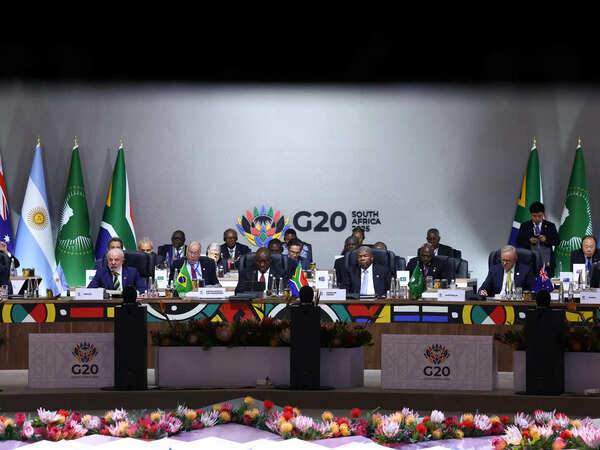
Leaders at the G20 summit in Johannesburg have reached a consensus on a declaration addressing climate change and other global challenges, even as the United States boycotted the event. The declaration highlights the urgency of tackling climate change, promoting renewable energy, and easing the debt burden on developing countries.
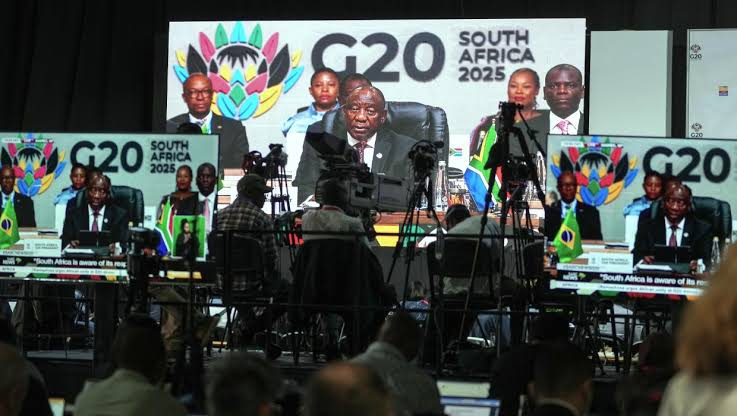

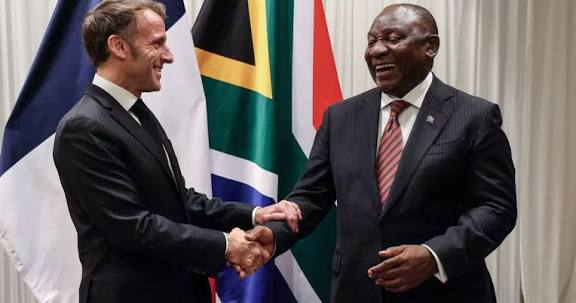
The summit, hosted by South African President Cyril Ramaphosa, proceeded without U.S. participation, reflecting ongoing tensions over the White House’s stance on climate policy. Despite the absence, Ramaphosa emphasized that the gathering represents the collective voice of all G20 members and insisted that progress could not be stalled by any single nation.
The declaration’s acknowledgment of climate change marks a clear contrast to the U.S. position, which has been skeptical of the scientific consensus on global warming. The summit also underscored the need for international solidarity, particularly in helping developing nations adapt to environmental disasters and transition to cleaner energy sources.
With the U.S. set to host the next G20 summit in 2026, South Africa confirmed it would not hand over the presidency to a junior official, signaling a firm stance on protocol and leadership in the multilateral forum.