From R8,000 to a creative empire: The Rise, Fall, and Legacy of a Durban Pioneer
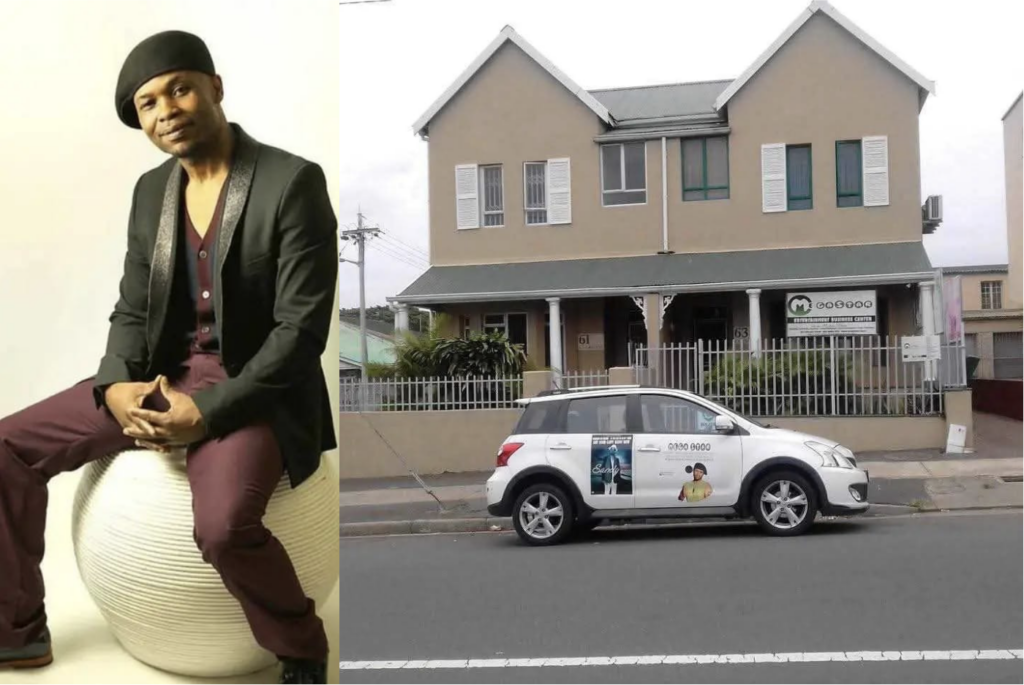
Legendary artist and businessman Sandy B has detailed of how his printing business in Durban KwaZulu Natal was started and later fell after foreign nationals bought a building and turned it to a brothel.
Sandy B whose real name is Sandile Bhengu, who is a legendary South African electronic music artist, widely celebrated as a pioneer and underground legend of the kwaito genre spoke about this on Wednesday morning.
Hailing from Durban, KwaZulu-Natal, he became a trailblazer in the early 1990s by independently releasing provincial kwaito music when the genre was just beginning to soundtrack South Africa’s transition into democracy.
“That R8,000 was never supposed to be just money. In 2003, after a grueling year of unemployment, finding those forgotten provident fund credits in my account felt less like luck and more like a mandate. I had two clear choices: spend it on surviving today, or invest it to change tomorrow. I chose tomorrow.
“With zero business plans but a fierce drive to act, I used every single cent to secure a single-room office in a prime Durban city center location. The inventory was laughably sparse: one plastic chair and a computer monitor with no tower. It was an illusion of an operation, but it gave me a physical footprint. When a chance street encounter led to a man mentioning he needed sticker printing and labeling, I didn’t hesitate. “I do that,” I told him. I brought him to my bare office, won his trust, and walked away with a R10,000 deposit,” he said
Sandy B said by outsourcing the printing and negotiating the margins, he cleared a R7,000 profit from that single order.
“I bought a real computer. Within three months, I upgraded the office space,” he said.
He said back then, the music and entertainment industry had a glaring bottleneck: if a Durban artist wanted to manufacture CDs or tapes, they had to send their work to Johannesburg.
“I realized nobody was servicing our local talent locally. Once again, I claimed the territory before I even fully owned the infrastructure. I announced that I was Durban’s go-to manufacturer. In the beginning, it was just me, hand-burning CDs one by one on a single burner, outsourcing the massive runs back to Jo’burg while keeping the local relationship alive. Every cent of profit went straight back into the engine. Small margins bought smaller printers; smaller printers eventually funded industrial machinery. Sleepless nights became my baseline. I fought through crippling rent hikes, operational hurdles, and the sheer exhaustion of building from the pavement up,” he said.
Sandy B said the business worked and it exploded into a massive double-storey building in the heart of the city.
“We became a legendary one-stop shop for the creative community. We had massive printing presses, a state-of-the-art recording studio, a photography setup, and an in-house clothing line. For a decade and a half, iconic celebrities and hungry upcoming artists walked through our doors. I was employing local youth, creating culture, and proving that Durban didn’t need to bow to Johannesburg.
“The turning point arrived in 2018. The white landlord who owned the building put it up for sale. I was offered the chance to buy it first, but when I reached out to institutions and networks for financial backing to anchor my business permanently, I was met with bureaucratic stutters: “Mmm, eeeh.” The silence from potential funders was deafening. No one had ever given me a handout since that original R8,000, and when I needed a structural lift to secure my legacy, the doors remained firmly shut,” he said.
He said foreign syndicates acted faster.
“A South African front lady handled the financing and signed the paperwork on behalf of a group of Nigerian investors. My final monthly rent was R11,000, but the writing was on the wall. They began taking over the building section by section.
“As I scrambled to pack up fifteen years of history, I ran clearance sales on our clothing lines to liquidate what I could. I refused to compromise my brand by sharing a roof with an enterprise whose illicit motives were glaringly obvious. My predictions materialized instantly: the moment I vacated, the building was converted into a brothel—ironically fueled by the local patrons who had once supported my clean business. Years later, they demolished the structure entirely to rebuild it as a decent B&B,” he said.
He said today, in 2026, the building is gone, replaced by a history that only exists in his memory and the archives of Durban’s music scene.
“It’s a bitter pill to swallow. The deal wasn’t even complicated; I just lacked the systemic backing to close it in time. Nice, ne? Yet, the building was never the real business—the vision was. Even now, eight years after the doors closed, my former staff members still text me looking for work, remembering the empire we built out of thin air. We took the risks, worked day and night, and gave Durban’s creative industry its original heartbeat. They can buy the concrete, but they can never buy the blueprint of a pioneer,” he said.