
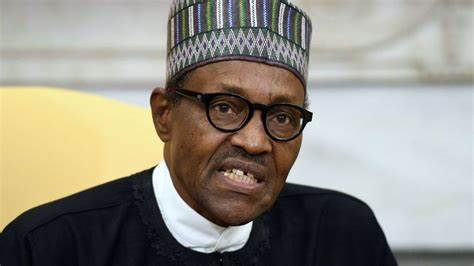
Nigeria is mourning the death of former President Muhammadu Buhari, who passed away in London on Sunday at the age of 82 after a long illness. His passing was confirmed by the spokesperson for President Bola Tinubu.
Buhari served as Nigeria’s democratically elected president from 2015 to 2023, becoming the first person in the country’s history to defeat a sitting president at the ballot box. His win over Goodluck Jonathan in 2015 was hailed as one of Nigeria’s fairest elections and marked a major moment in the country’s democratic journey.
Before his democratic era, Buhari had already made his mark on the nation decades earlier, taking power as a military ruler in 1983 following a coup. With a reputation for discipline and an anti-corruption stance, he quickly earned both admiration and criticism.
As a civilian president, Buhari styled himself a “converted democrat” who had swapped his military uniform for traditional kaftans and prayer caps. “I belong to everybody and I belong to nobody,” he often told Nigerians, signaling a vision of impartial leadership.
Yet despite early hopes, his time in office was marked by mixed results. Many Nigerians grew frustrated with the pace of change. His slow approach to governance—particularly his six-month delay in appointing a cabinet after taking office—earned him the nickname “Baba Go Slow.”
During his tenure, insecurity worsened. While Buhari had been expected to quell armed violence, unrest spread beyond the northeast to other regions, with kidnappings, insurgency, and separatist tensions escalating. Nigeria also fell into its first recession in a generation under his watch, partly due to falling oil prices.
Born on December 17, 1942, in Daura, Katsina State, Buhari joined the military at age 19 and eventually rose to the rank of major-general. After seizing power in 1983, he launched a campaign to straighten up a mismanaged nation, known for its strict policies—from economic decisions to everyday discipline like orderly bus queues.
His regime made global headlines in 1984 when it was linked to a failed attempt to kidnap a former Nigerian minister in the UK—a plot foiled at the airport when customs officials discovered the abducted man hidden in a crate.
That stint in power lasted only 18 months before he was ousted by General Ibrahim Babangida. Over the next three decades, Buhari remained a fixture in Nigerian politics, contesting several elections before his eventual presidential win in 2015.
Buhari leaves behind a legacy of discipline, anti-corruption advocacy, and a complex presidency that sparked both hope and disappointment in equal measure.