
The governments of the UK, France, and Germany have urged Israel to immediately lift restrictions on the flow of humanitarian aid into Gaza, describing the withholding of basic supplies as unacceptable. They emphasised that the war must end to prevent further suffering, calling for an immediate ceasefire and the release of hostages.
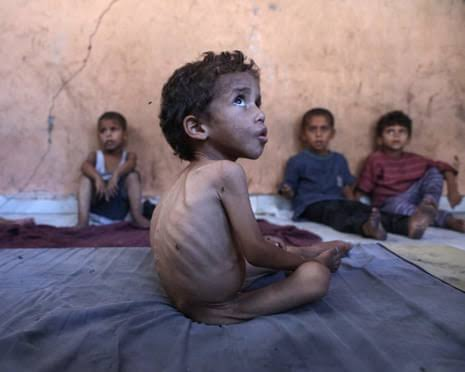
The situation on the ground has become dire. Gaza’s health ministry reported nine more deaths from malnutrition in the past day alone, raising the total to 122 since the conflict began, including 83 children. Aid organisations are warning of “catastrophic levels of malnutrition”, especially among children, who are the most vulnerable to the effects of hunger.
One mother described how her 14-year-old son has lost over half his body weight. Another mother spoke tearfully of her toddler, who weighs just 6kg after severe malnutrition left him too weak to sit or stand. She said she works tirelessly to buy formula milk but cannot provide enough, adding simply, “I’m so tired.”
International efforts to get food into Gaza have faced significant challenges. Airdrops are being considered as an emergency measure, but humanitarian leaders warn they are expensive, inefficient, and dangerous, sometimes leading to injuries or deaths when parachutes fail or crowds scramble for supplies.
Currently, over 6,000 truckloads of food and medical aid remain stuck in Egypt and Jordan, awaiting approval to enter Gaza. Meanwhile, almost a third of people in Gaza are not eating for days at a time.
In the political sphere, France has pledged to recognise the state of Palestine in September, hoping to generate diplomatic momentum for peace talks. The UK has not committed to immediate recognition, saying it should form part of a broader plan for a two-state solution.
While Israel maintains that Hamas steals aid and is responsible for the crisis, humanitarian experts argue that without urgent changes to allow unrestricted delivery of food and medicine, famine declarations will soon follow. One former US official warned that starvation has reached a tipping point, with deaths occurring daily from hunger or related diseases that would otherwise be treatable.
Many are calling for an end to the war, arguing that protecting civilians and meeting their most basic needs must come before political disputes. Without swift action, the population faces the threat of a total humanitarian collapse.