
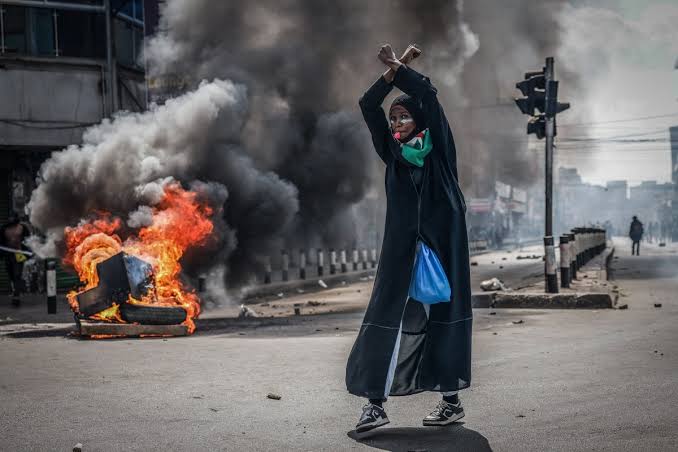
What began as a solemn day of remembrance turned into a violent crisis on the streets of Kenya. Demonstrators who had gathered to mark one year since last year’s deadly protests were met with force, leaving at least eight people dead and over 400 injured.
In downtown Nairobi, the air was thick with tear gas as security forces clashed with protesters, some of whom hurled stones and called for the resignation of President William Ruto. Barbed wire cordoned off key government buildings while water cannons and riot police filled the streets.
The protest, meant to honour victims of last year’s unrest sparked by unpopular tax hikes, drew thousands across 23 counties. But the peaceful beginning was quickly overshadowed by chaos, especially in towns like Matuu, where two people reportedly died from gunshot wounds.
Hospitals across the country were overwhelmed. At least 83 people were reported to be in serious condition, with many suffering from injuries sustained during the clashes.
In response to the growing unrest, authorities moved to restrict the flow of information. Television and radio broadcasters were ordered to halt live coverage of the events, and access to certain social media platforms was reportedly disrupted.
Despite this, the voices of Kenya’s frustrated youth rang out across the capital. “We want a complete overhaul of the system,” said one protester in Nairobi. “The system is rotten, the system is rogue.”
The sense of disillusionment has been building. President Ruto, who came to power in 2022 promising economic reform, now faces widespread criticism for rising living costs, alleged corruption, and what many view as an increasingly authoritarian response to dissent.
Anger over police brutality has grown, especially after a recent incident in which a teacher reportedly died in police custody. Protesters also recalled an earlier attack on peaceful demonstrators by armed gangs on motorbikes—groups believed to be working alongside authorities.
International observers have raised concerns about the state of Kenya’s democracy, condemning the use of hired enforcers to disrupt peaceful protests.
As the dust settles, many are left wondering what lies ahead. “If we truly wanted to honour June 25,” said one analyst, “it should have been with silence, prayer, and reflection—not bloodshed and chaos.”
Yet for many Kenyans, the only path forward seems to be continued resistance in the face of oppression.