US House Passes Bill to Cut Federal Aid to Universities That Boycott Israel
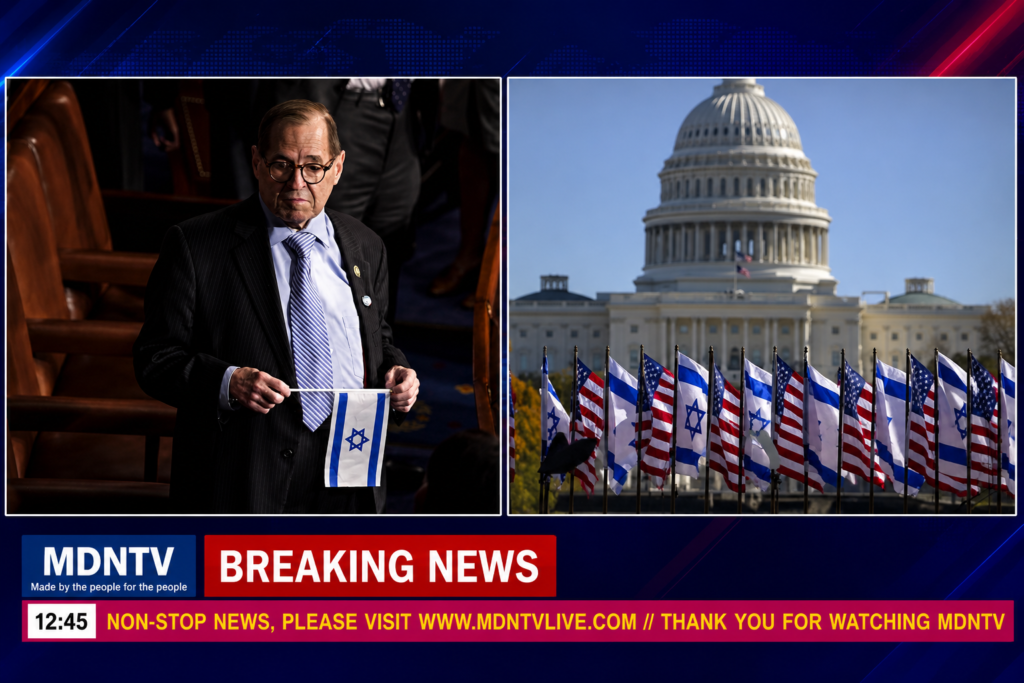
The United States House of Representatives has passed controversial legislation that could block certain federal funding from American colleges and universities that participate in commercial or academic boycotts involving Israel.
The Republican-controlled House approved the Protect Economic and Academic Freedom Act on Thursday, 3 September 2026, by 237 votes to 169.
Official voting records show that 203 Republicans and 33 Democrats supported the legislation, while 167 Democrats and two Republicans voted against it.
The bill is not yet law. It must still clear the US Senate before it can be sent to President Donald Trump for his signature.
What the Israel boycott bill would do
The legislation seeks to change conditions attached to certain federal education funding received by American colleges and universities.
Universities participating in federal student-aid programmes could face restrictions if they engage in what the legislation describes as a “nonexpressive commercial boycott” involving Israel or other countries designated as major strategic partners of the United States.
Institutions receiving certain international education and foreign-language funding would also be required to certify that they are not preventing students, academics or institutions from participating in programmes involving Israel.
The measures could affect activities including research partnerships, academic conferences, exchange programmes and study-abroad opportunities.
Institutions found to be in breach of the requirements could lose eligibility for specified federal funding.
Democrats divided as 33 back Republican-led bill
Thursday’s vote exposed significant divisions within Congress over Israel and the growing political battle surrounding university protests.
The House recorded 237 votes in favour of the legislation and 169 against, while 27 representatives did not vote.
Thirty-three Democrats crossed party lines to support the measure alongside 203 Republicans.
The overwhelming majority of Democrats opposed it.
The result gives the legislation bipartisan support in the House, despite fierce disagreement over whether the federal government should use university funding as leverage against institutional boycotts.
Supporters say bill targets discrimination
Supporters of the legislation argue that institutional boycotts of Israel can discriminate against Israeli universities, academics and students.
They say American universities receiving federal taxpayer funding should not participate in discriminatory commercial or academic boycotts targeting Israel.
Supporters also argue that the legislation does not prevent individual students, professors or activists from criticising the Israeli government.
Instead, they say it focuses on decisions taken by universities as institutions.
The legislation comes amid continuing concerns about antisemitism on American university campuses following years of protests linked to Israel’s war in Gaza.
Opponents raise free-speech concerns
Critics warn that the legislation could have serious implications for political expression and academic freedom.
Some lawmakers who oppose the Boycott, Divestment and Sanctions movement have nevertheless rejected the bill because of concerns about the federal government using financial pressure to influence political decisions made by universities.
The debate has therefore become about more than Israel.
It raises a wider question over where protected political expression ends and institutional economic activity begins.
Critics argue that boycotts have historically been used as a form of political protest and that Congress should be extremely cautious about attaching federal funding penalties to such activity.
Gaza war transformed US university campuses
The legislation follows years of demonstrations at American universities over Israel’s military operations in Gaza.
The conflict erupted after the Hamas-led attack on Israel on 7 October 2023, which killed about 1,200 people according to Israeli figures.
Israel’s subsequent military campaign in Gaza triggered widespread international protests and became one of the most divisive political issues on American university campuses.
Students at several institutions established protest encampments, organised demonstrations and demanded that their universities divest from companies or institutions they regarded as connected to Israel’s military operations.
Some activists also called for academic boycotts of Israeli institutions.
Those campaigns prompted an intense national debate over antisemitism, Palestinian rights, freedom of expression and the responsibilities of universities.
Trump administration has confronted universities
The legislation comes amid a wider confrontation between President Donald Trump’s administration and several American universities.
Federal authorities have investigated institutions over their handling of antisemitism allegations and campus demonstrations.
Republicans have repeatedly accused some universities of failing to adequately protect Jewish students.
Pro-Palestinian activists and civil-liberties groups have pushed back against attempts to characterise criticism of Israel or support for Palestinian rights as inherently antisemitic.
The competing positions have transformed university campuses into a major front in America’s political battle over Israel and Gaza.
What is BDS?
The Boycott, Divestment and Sanctions movement, commonly known as BDS, advocates economic and institutional pressure against Israel over its treatment of Palestinians.
Supporters describe boycotts and divestment as peaceful methods of applying political pressure.
Opponents argue that BDS unfairly singles out Israel and can contribute to hostility towards Israeli and Jewish students and institutions.
The legislation approved by the House does not simply outlaw individuals from supporting BDS.
Its potential financial consequences are aimed at institutional participation in specified commercial boycotts and restrictions on academic cooperation.
That distinction is important because Thursday’s vote does not amount to a nationwide ban on Americans advocating a boycott of Israel.
Bill now heads to Senate
The House vote represents only one stage of the legislative process.
The Protect Economic and Academic Freedom Act must still pass the US Senate before it can reach President Trump.
Universities therefore have not automatically lost federal funding following Thursday’s vote.
If the Senate approves the legislation in the same form and Trump signs it, the new requirements could then become federal law.
The Senate battle is expected to attract significant attention from pro-Israel organisations, university groups, civil-liberties advocates and pro-Palestinian activists.
Israel remains major dividing line in US politics
Thursday’s vote demonstrates how deeply the debate over Israel has penetrated American domestic politics.
Support for Israel remains strong among Republicans and many Democrats in Congress.
At the same time, criticism of Israel’s conduct in Gaza has increased among sections of the Democratic Party and its voter base.
The House vote captured that division.
While most Democrats opposed the legislation, 33 joined Republicans in supporting it.
With the bill now moving to the Senate, the political fight over Israel, university funding, academic freedom and campus activism is far from over.