I WATCH THEM SHOOT ME AND SURVIVED
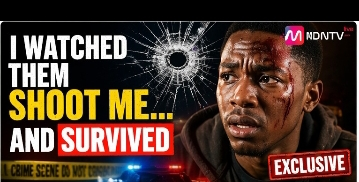
That night in Soweto, he had only stepped out to buy R250 airtime. When one spaza shop was closed, he walked to another, unaware of the danger ahead. Along the way, he encountered a group of about eight men. Two of them approached him, one armed with a knife and the other with a gun.
They searched him and took the R250 he had. Then, in a chilling twist, they told him to run. As he obeyed and took just a few steps, gunshots rang out. He was hit and fell to the ground. Moments later, they shot him again.
Unable to move, Livhuwani lay there fighting for his life. His thigh had gone weak, his body unresponsive. Blood filled his mouth and nose, making it hard to breathe or even call for help. As his strength faded, he felt himself slipping, close to losing consciousness.
Then came a turning point. He heard footsteps, a woman passing by. Though he could barely see her, he managed to gather enough strength to call out. She noticed him and immediately rushed to help. After asking what had happened, she quickly went to call for assistance, returning with others, including the police.
Click the link below to watch the full video👇
https://youtu.be/Pwyg4v649Ds?si=EGXO-pRDQTYne3YB
Even as help arrived, the attackers had not fled. They were still nearby, watching from a distance.
Livhuwani was rushed to the hospital on a stretcher, catching a glimpse of the blood he had lost along the way. But his ordeal didn’t end there. According to him, he was not immediately attended to upon arrival. It was only after the woman who helped him contacted his twin brother who then confronted hospital staff that he finally received urgent care.
Doctors later revealed the extent of his injuries: he had been shot six times. He was fitted with a colostomy bag due to severe internal damage, and three bullets still remain lodged in his legs. He was also told he might never walk or sit normally again.
Although the stoma bag was supposed to be removed after six months, he says that never happened, and he received little follow-up care. Seeking answers, he went to another hospital, where further scans, including an MRI, showed that the remaining bullets would need to be removed before any additional procedures could be done.
Despite everything, Livhuwani has not forgotten what happened or those responsible. He says he clearly remembers the attackers and believes they can be identified. He also maintains that the woman who helped him knows the police station involved.
Now, as he continues his long road to recovery, he is considering taking legal action against the state for alleged negligence.
His story is one of survival, but also of pain, unanswered questions, and a determination to seek justice after a night that changed his life forever.