MKHWANAZI TAKES ON PARLIAMENT AS HE CALLS OUT LEADERSHIP FAILURES IN EXPLOSIVE FINAL TESTIMONY
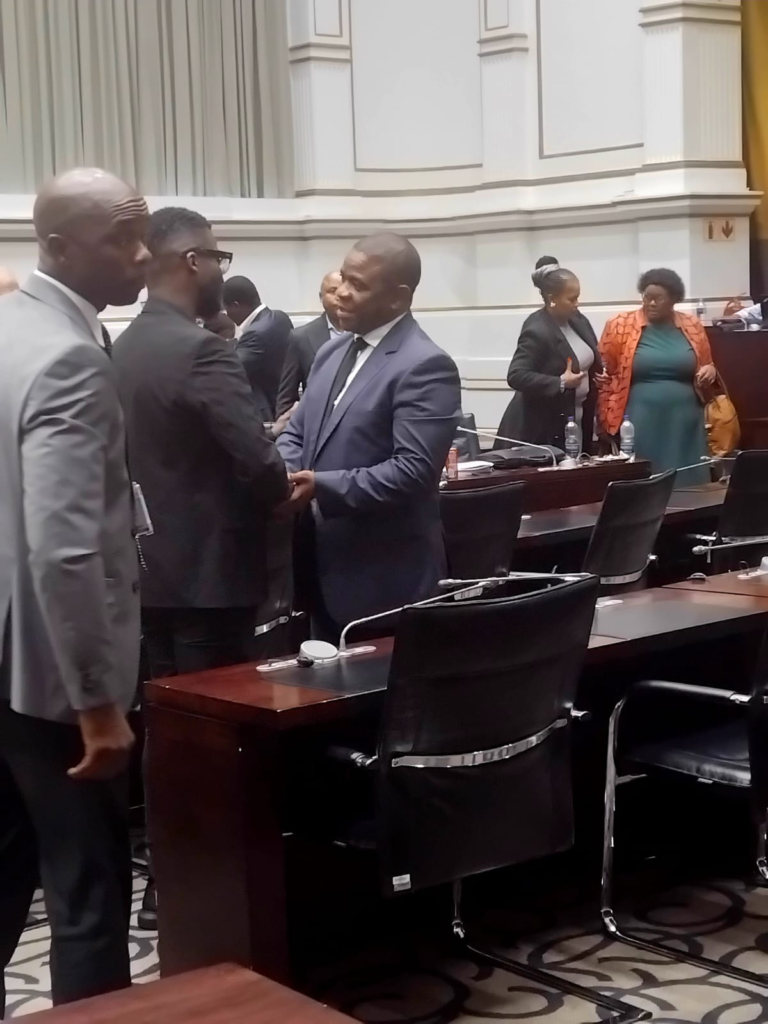
KwaZulu-Natal Police Commissioner General Nhlanhla Mkhwanazi has closed the Ad Hoc Committee hearings with a dramatic and confrontational appearance that has left Parliament under pressure.
After months of intense testimony, Mkhwanazi did not hold back.
Instead of simply concluding his evidence, he turned his focus directly on committee members, questioning their leadership, approach and handling of the investigation.
He made it clear that the information he presented was not personal, but the result of a collective investigation, reinforcing the weight of the allegations before Parliament.
But the most striking moment came when he moved to correct the record.
Mkhwanazi requested permission to withdraw one allegation after revealing that a critical error had occurred during the extraction of data from Vusi Matlala’s devices.
According to his testimony, a case of mistaken identity led investigators to link financial transactions to the wrong individual.
The person, who had a number similar to former Police Minister Bheki Cele stored under the name Ndosi, allegedly received money from Matlala.
Believing it was legitimate, the man reportedly spent the money before communication with Matlala suddenly stopped.
Mkhwanazi confirmed that the individual would not face charges.
Despite this correction, he stood firm on all other allegations made earlier in the inquiry, refusing to retract any further claims.
The hearing intensified when a handwritten letter from a prisoner linked to Matlala was introduced.
The letter allegedly implicated high profile figures, including legal representatives connected to suspended Police Minister Senzo Mchunu, senior officials within the National Prosecuting Authority and other unnamed SAPS leadership figures.
Mkhwanazi went further, making bold claims about internal power struggles within law enforcement.
He suggested that if Mchunu had remained in office, key cases linked to Matlala could have collapsed and senior leadership positions within SAPS could have been reshaped.
He openly labelled senior officials within the police as untrustworthy and accused others of dishonesty, deepening the sense of division at the highest levels of law enforcement.
The tension spilled into open confrontation during exchanges with Members of Parliament, including a heated moment with MP Fadiel Adams.
But the proceedings continued.
In a powerful closing message, Mkhwanazi urged the committee to go further and seize the devices and full administrative records of Minister Mchunu as part of the investigation.
He also outlined what he described as the three critical drivers of crime in South Africa, pointing to cash in transit heists, tender systems and border control failures.
As the hearings officially come to an end, Committee Chairperson Soviet Lekganyane confirmed that the findings will soon be released to the public.
Now the country waits.
Because what started as a parliamentary inquiry has now exposed deep fractures within South Africa’s law enforcement leadership.
And the final report could have serious consequences for some of the most powerful figures in the system.