“Enough Is Enough”: Venezuela’s Acting President Pushes Back Against US Pressure
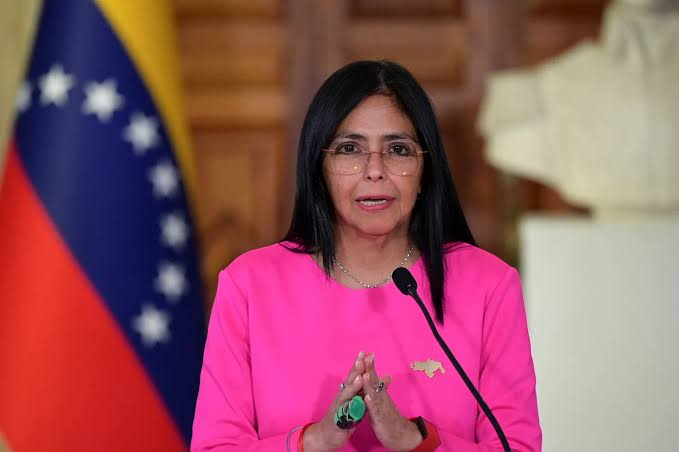
Venezuela’s acting president, Delcy Rodríguez, has openly pushed back against growing pressure from the United States, saying she has had enough of Washington issuing instructions to her country.
Speaking to oil workers in the coastal city of Puerto La Cruz, Rodríguez said Venezuela must be allowed to resolve its own political differences without outside interference. Her remarks come as she works to steady the country following the capture of former leader Nicolás Maduro by US forces earlier this month.
Rodríguez has been walking a difficult line since stepping into the interim role. While backed by the United States, she has also tried to keep Maduro loyalists and divided political factions from turning against her at home. Nearly a month into her leadership, that balancing act is becoming increasingly strained.
“Enough already of Washington’s orders over Venezuelan politicians,” Rodríguez told the crowd. She stressed that the country has paid a heavy price for years of political extremism and conflict, and said Venezuela’s future must be decided by Venezuelans themselves.
Since Maduro and his wife were taken into US custody in January, Washington has maintained strong pressure on Caracas, including demands linked to oil production and foreign alliances. Rodríguez, who once served as Maduro’s deputy, has repeatedly stated that Venezuela is not governed from abroad, though she has avoided outright confrontation with the US.
At another public event, she said Venezuela does not fear the United States but called for mutual respect. She emphasized that any relationship between the two countries must be grounded in international law, dignity, and respect for Venezuela’s history and sovereignty.
US President Donald Trump initially claimed the United States would effectively “run” Venezuela after Maduro’s capture, before later endorsing Rodríguez as interim leader. He has since spoken positively about her, saying the two sides were getting along well.
Inside Venezuela, tensions remain high. The country is deeply divided between Maduro loyalists, left-wing groups critical of his leadership, and supporters of late president Hugo Chávez who believe Maduro betrayed the original socialist vision. Opposition leaders are watching developments closely, with uncertainty over what role they may play in shaping the country’s future.
Washington has reportedly laid out several conditions for cooperation, including demands that Venezuela cut ties with countries such as China, Iran, Russia and Cuba, and agree to work exclusively with the US on oil production. Oil remains Venezuela’s economic lifeline, with the country holding the world’s largest reserves of extra-heavy crude.
Alongside political pressure, the US has also called for the release of political prisoners. In recent days, more than 100 detainees were freed in what rights groups described as one of the largest single-day releases in years. Hundreds have now been released in total since early January.
Venezuelan officials say the releases are part of a broader effort to promote peace and coexistence, and have indicated they are open to international verification of the process. However, activists continue to demand transparency and a full public list of those released.
As Rodríguez attempts to stabilize the country, her latest comments signal a clear message: cooperation with the United States will continue, but not at the cost of Venezuela’s independence.