Opinion: A Crisis of Leadership — When Political Point-Scoring Trumps Public Safety
South Africans are drowning in a tidal wave of drugs, crime and lawlessness. Families in townships and suburbs alike are living with fear, losing loved ones to addiction, gang violence, and criminal syndicates that operate with increasing boldness.
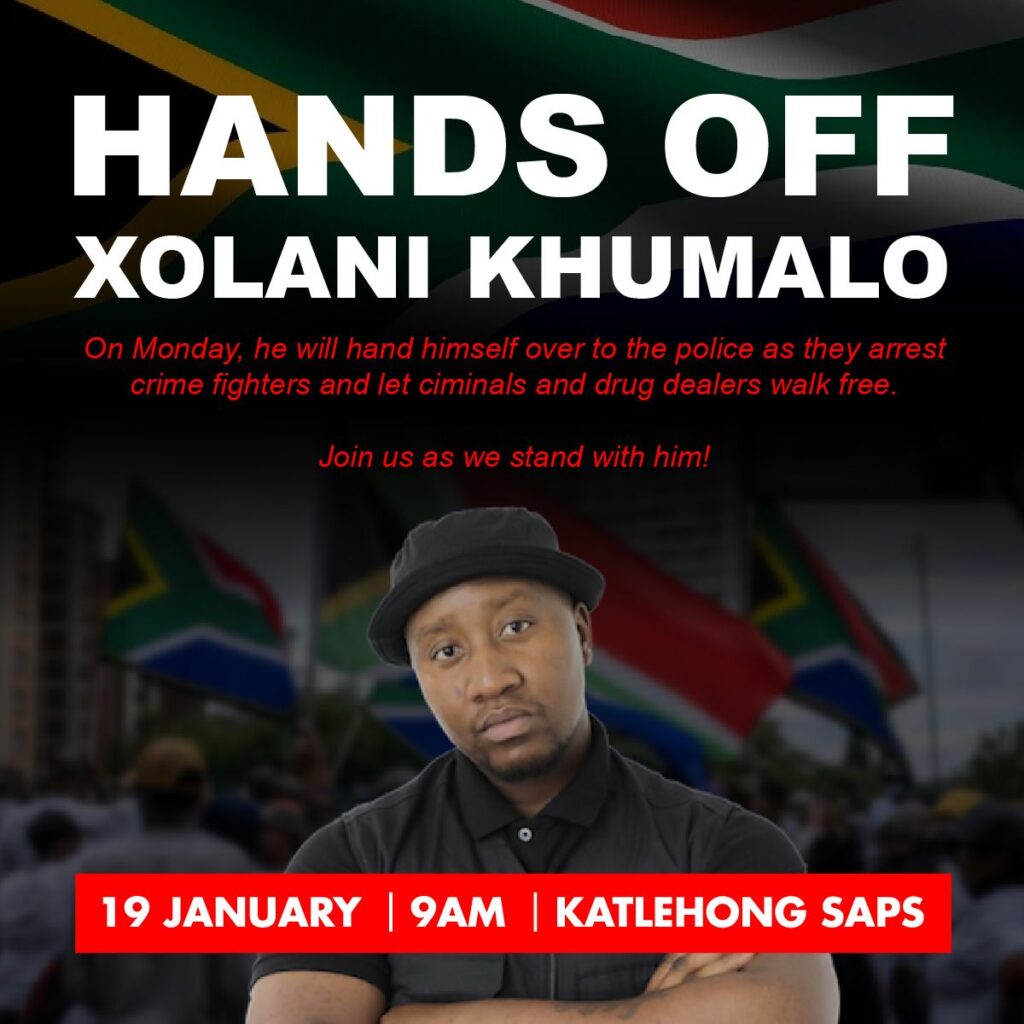
Into this rupture walks Xolani Khumalo Mayoral candidate for ActionSA in Ekurhuleni. A citizen who declared war on drugs and lawlessness in Ekurhuleni because the state has failed to protect its people. His statement was clear:
“I knew that when I declared war on drug dealers and lawlessness… they would target me, but this is a fight we are ready for!”
Rather than engage with the real issue, the scourge of illegal drugs and violent crime Obakeng Kante, MMC of Agriculture for the City of Ekurhuleni, chose to respond with a political barb:
“you want to be a mayor of drugs and illegal immigrants what about other issues in the municipality?”
This tweet was not only tone-deaf; it was irresponsible and reckless in the context of a community begging for safety, stability, and leadership.
Let’s unpack why this response is more than just a flippant political retort.
1. South Africa Faces a Legitimate Drug Crisis
South Africa’s drug problem is not a fringe issue, it is a pervasive social emergency. Drug abuse has torn families apart, fuelled violent crime, and overwhelmed communities that see little to no effective intervention from law enforcement. When citizens like Xolani step up because of state inaction, the instinct should be to listen, partner, and strategise not to taunt them with politically motivated digs.
2. Politicians Should Lead — Not Score Points
Leadership demands maturity. It demands courage. When a public representative dismisses the concerns of ordinary citizens by asking them to prove their understanding of “finances of the municipality and service delivery,” they reveal their own priorities: self-interest and political sniping. South Africans don’t need Twitter guerrilla warfare. They need accountability from those in office.
3. Ekurhuleni’s Governance Track Record Shows Systemic Failures
The municipality over which critics like Obakeng Kante serve has been repeatedly criticised for its governance lapses:
Ekurhuleni has municipal properties that have been “hijacked,” where criminal activity hinders revenue collection and operations, straining the housing company’s finances and service delivery. This is a social crisis with real consequences for residents.
Independent investigations previously revealed that community waste collectors were short-changed in a R1.2 billion programme, with tens of millions unaccounted for, a matter the City allegedly ignored despite its own forensic report confirming the issues.
These are not minor quibbles over potholes or trash bins. These are failures in basic governance, financial oversight, and accountability.
4. When Safety Becomes a Political Punchline
Your job as an elected official is to protect the most vulnerable, not turn their pain into an opportunity for political provocation. By implying that someone who takes a stand against drugs “wants to be a mayor of drugs and illegal immigrants,” you not only trivialise the suffering of communities you degrade the seriousness of the crisis and alienate the very people you are meant to serve.
Reducing genuine concern about societal breakdown to partisan banter is not just lazy politics. It is moral abdication.
5. The Public is Watching — And They’re Angry
People are not stupid. They see the disconnect between politicians shouting insults on social media and the lived reality of citizens who fear for their loved ones’ safety every single day. Ordinary South Africans are asking real questions about why crime seems to escalate while those who confront it directly are scrutinised more rigorously than the criminals themselves.
They are not asking for vigilantism. They are asking for accountable governance.
6. Your Personal Attacks Reveal Your Weakness, Not His
After you were challenged and rightfully called out your response was to personalise the disagreement:
“Useless individuals who failed to lead their personal relationships can’t lecture me with anything, nothing.”
That is not only irrelevant, it is disgracefully juvenile coming from an MMC. This is not about personal relationships or Twitter jabs. This is about a crisis that eats at the fabric of our society.
Your deflection does nothing to address the root issue: drug dealers and criminal networks are ravaging communities because institutions are failing to keep them in check.
7. If You Want to Lead, Show It
If your ambition extends beyond petty Twitter fights. If you actually want to be taken seriously as a public servant, start by demonstrating a real understanding of governance:
Explain how you intend to confront drug syndicates in your jurisdiction.
Detail how municipal finances are being used to improve public safety.
Articulate a plan to restore law enforcement capacity in townships and suburbs alike.
Address why communities are turning to citizens like Xolani when the police and councils fail them.
Leadership isn’t proven in a tweet. It’s proven in strategy, allocation of resources, partnerships with law enforcement, meaningful community engagement, and results.
8. This Is Not About Egos — This Is About People’s Lives
Your dismissive answer says more about you than it does about Xolani Khumalo. When citizens raise alarms about drug crises and lawlessness, their concerns deserve respect, not ridicule. When communities stand beside those trying to make a difference, they are asking for unity, not division.
If your response to a crisis is to deflect blame, politicise tragedy, and attack character instead of confronting the real problem, then you are part of the problem not the solution.
South Africans deserve better than political theatre. They deserve leaders who will stand with them, not mock them. They deserve accountability, not slogans. They deserve safety, not sarcasm.
If you cannot provide that, then perhaps it’s time to step aside and let someone who understands the gravity of the situation take the lead.