
Deadly Bushfires Leave One Dead and Hundreds of Homes in Ruins Across Australia
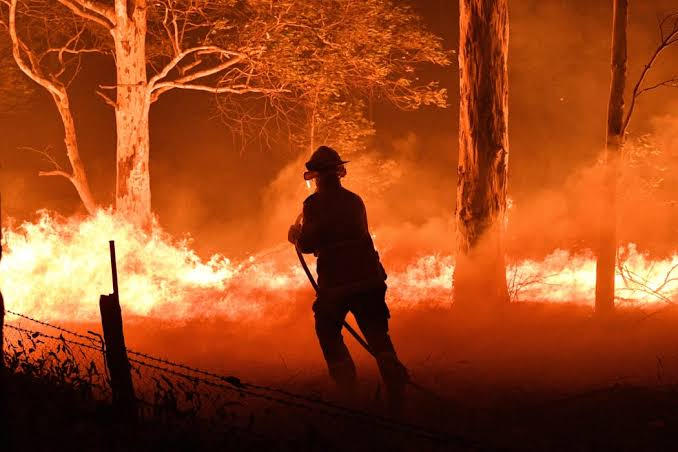
At least one person has lost their life and around 300 homes and buildings have been destroyed as powerful bushfires continue to tear through south-east Australia.
The fires have been burning for days across dozens of locations, with Victoria bearing the brunt of the disaster. Parts of New South Wales have also been affected, as flames sweep across land covering an area nearly twice the size of Greater London.
Victoria has declared a state of emergency as thousands of firefighters, supported by more than 70 aircraft, battle to contain the blazes. Residents in more than a dozen communities have been urged to evacuate as conditions remain dangerous.
Officials warn that the fires could continue for weeks. Extremely hot, dry and windy weather has made the situation unpredictable and difficult to control.
More than 30 fires are currently active across Victoria, with several posing a serious threat to homes and lives. By Sunday morning, an estimated 350,000 hectares of land had already been burned.
Authorities confirmed that human remains were discovered in the small village of Gobur, near Longwood, north of Melbourne. The victim has not yet been identified. Emergency workers who recovered the body described the task as emotionally devastating, as the tight-knit community struggles to come to terms with the loss.
Smoke from the fires has also severely affected air quality across large parts of Victoria, including Melbourne, raising health concerns for residents.
Officials say this is the worst bushfire crisis to hit south-east Australia since the catastrophic fires of 2019–2020, which claimed dozens of lives and destroyed vast areas of land.
One of the hardest-hit communities is Harcourt, where entire streets have been reduced to ashes. Firefighter Tyrone Rice lost his own home while he was out battling the fires. Learning that his house had burned down while he was protecting others, he described the moment as heartbreaking, but said he knew he was not alone in his loss.
Local fire crews say the destruction is overwhelming, with many homes completely flattened, leaving only twisted metal and ash behind.
Experts note that while individual fires cannot always be directly blamed on climate change, rising temperatures and prolonged dry conditions are making bushfires more frequent and more intense.
As firefighters continue their exhausting battle, authorities warn that the danger is far from over and urge residents to remain alert and follow evacuation advice.