Tension and Hope as US Warns of More Airstrikes on Terror Camps in Nigeria
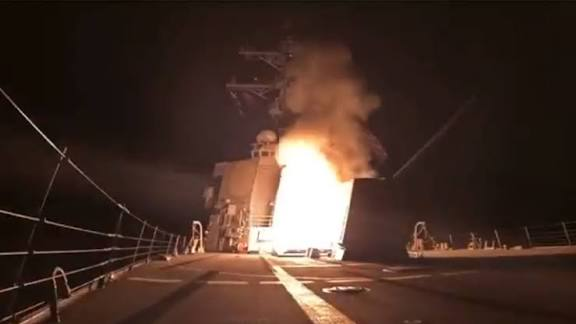
Anxiety and cautious optimism are spreading across Nigeria following fresh airstrikes by the United States and its allies on suspected terrorist camps in the North-West, with warnings that more attacks could follow.
The bombings, which began on December 25, 2025, have sparked mixed reactions nationwide. While some Nigerians see the strikes as long overdue action against violent extremists, others worry about the broader implications for national sovereignty, religious harmony, and long-term security.
The military action is aimed at dismantling terrorist networks accused of carrying out deadly attacks and mass killings over the past decade. Thousands of lives have been lost, communities displaced, and entire regions destabilised by insurgency, banditry, and violent extremism.
The US president described the strikes as forceful and precise, warning that further action would be taken if attacks on Christian communities continued. According to US officials, the operation targeted terrorist elements and was coordinated with Nigerian authorities.
The situation has placed Nigeria at the centre of growing international attention, with global leaders weighing in on the violence and calling for an end to attacks on civilians. Israel also joined calls condemning the killings, adding to the international pressure surrounding Nigeria’s security crisis.
Nigeria’s government confirmed that the airstrikes were part of a broader security partnership with international allies. Officials stressed that the collaboration involves intelligence sharing, strategic coordination, and operations carried out in line with international law and respect for Nigeria’s sovereignty.
Authorities emphasised that the primary goal of all counter-terrorism efforts remains the protection of civilian lives, national unity, and the rights of all citizens, regardless of religion or ethnicity. The government reiterated that terrorism, whether directed at Christians, Muslims, or other communities, contradicts Nigeria’s values and threatens global peace.
Experts and analysts, however, remain divided. Some argue that foreign military intervention sends a strong message to terrorists and their sponsors, showing that the international community will no longer look away. Others warn that airstrikes alone cannot solve deeply rooted problems such as poor governance, poverty, exclusion, and weak institutions.
Several security and political analysts cautioned that bombing campaigns risk being interpreted as religiously motivated, potentially inflaming tensions in an already fragile country. They argue that sustainable peace can only be achieved through inclusive governance, economic development, and social justice, rather than military force alone.
Retired diplomats and security experts described the strikes as both an opportunity and a risk. While successful operations could weaken terror groups and improve security, failure or missteps could plunge the country into deeper instability.
International law experts also noted that terrorism is now treated as a global threat that often overrides traditional boundaries of sovereignty, arguing that Nigeria’s security is tied to regional and global stability.
Meanwhile, US defence officials warned that additional strikes are possible, describing the Christmas Day operation as only the beginning. Nigerian authorities confirmed that intelligence cooperation played a key role in the operation and described the action as a joint effort to combat terrorism and protect civilians.
Not everyone agrees with the approach. A prominent Islamic cleric strongly criticised the involvement of foreign forces, warning that continued cooperation with the US could turn Nigeria into a battleground for global power struggles. He urged the government to seek security partnerships with more neutral countries and cautioned that foreign intervention could deepen religious divisions and undermine sovereignty.
The Defence Headquarters later confirmed the airstrikes, stating that they were carried out with federal approval and based on credible intelligence. Military officials said the operation was carefully planned to weaken terrorist capabilities while minimising harm to civilians.
Several retired military officers welcomed the strikes, describing them as a positive step in Nigeria’s fight against terrorism. They stressed, however, that operations must remain precise and focused on criminals and their sponsors, not innocent citizens.
US lawmakers also praised the strikes, calling them a decisive move to halt the killing of Christians and restore security in affected communities. They described the operation as a first step toward ending years of bloodshed and instability.
As Nigeria watches events unfold, the airstrikes have opened a new chapter in the country’s long-running battle with terrorism — one filled with both hope for improved security and fear of unintended consequences.