Putin and Trump’s Envoy Prepare for Crucial Peace Talks Aimed at Ending the Ukraine War
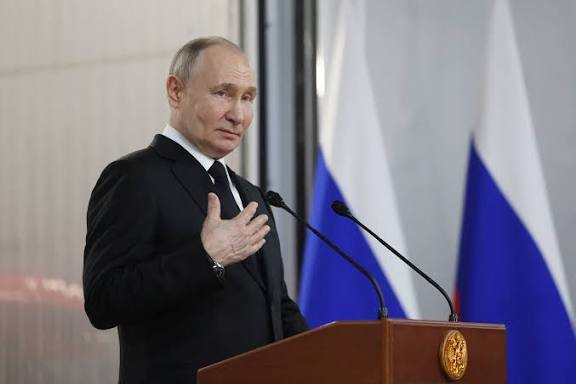
Russian President Vladimir Putin is set to meet US special envoy Steve Witkoff in Moscow on Tuesday, as Washington signals growing optimism about reaching a breakthrough to finally end the war in Ukraine.
Jared Kushner, a close adviser within former President Donald Trump’s circle, is also expected to take part in the discussions. His involvement follows two days of negotiations in Florida between Ukrainian and US officials, where both sides worked to refine a peace plan previously seen as leaning too heavily in Russia’s favor.
Ukrainian President Volodymyr Zelensky described those earlier meetings as constructive but acknowledged that several difficult issues still need to be resolved. After meeting with France’s president in Paris, he emphasized that Ukraine’s top priorities remain protecting its sovereignty and securing strong, lasting security guarantees.
He stressed that the most sensitive issue is territory, as Moscow continues to push for Ukraine to give up land in the east—territory that Kyiv insists it will never surrender.
Witkoff has been holding additional talks with key leaders, including the UK prime minister and Ukraine’s chief negotiator, while other European figures joined virtually. The White House has expressed optimism, saying the peace proposal has been significantly improved and that hopes are rising that the conflict could be brought to an end.
Putin recently acknowledged seeing a version of the US plan and suggested it could serve as a starting point for a real agreement. But soon after, Russian officials signaled hesitation, especially after Ukraine and its European partners secured changes to the draft.
The original version of the US-Russia draft circulated in November caused alarm in Kyiv and across Europe. It heavily favored Moscow’s terms and even outlined how frozen Russian assets in Europe should be handled, as well as conditions for Ukraine’s access to European markets.
France has insisted that no peace plan is officially finalized and that Ukraine and its European allies must be fully included in shaping any agreement. France also made clear that only President Zelensky can make decisions regarding territorial concessions and that questions around frozen assets, security guarantees, and EU membership must involve Europe directly.
European leaders have praised efforts to end the war but warn that Moscow appears willing to negotiate only when the terms benefit its position. Some worry that pressure could fall unfairly on Ukraine—the weaker side—just to force a quick end to the conflict.
Security guarantees remain another major challenge. Ukraine and European countries want strong protections, possibly even NATO membership, to ensure Ukraine cannot be attacked again. Russia opposes this entirely, and Trump has previously said he would not support Ukraine joining NATO.
Meanwhile, Russia claims to have captured the eastern towns of Pokrovsk and Vovshansk, though Ukraine has not confirmed their fall. Independent monitoring groups also report that neither town has been fully taken.
The upcoming meeting in Moscow is seen as a pivotal moment. Whether it leads to genuine progress—or highlights just how far apart both sides remain—could determine the next phase of the war and the prospects for peace.