
Rubio Visits Israel as Gaza City Faces Intensified Strikes
U.S. Secretary of State Marco Rubio has arrived in Israel to discuss the ongoing war in Gaza, days after an Israeli strike on Hamas figures in Qatar stirred global condemnation.
Before leaving Washington, Rubio acknowledged that President Trump was unhappy with the attack on a close American ally, but stressed that the U.S.–Israeli relationship remained strong. “The president wasn’t pleased, but we need to look forward and decide what comes next,” he said.
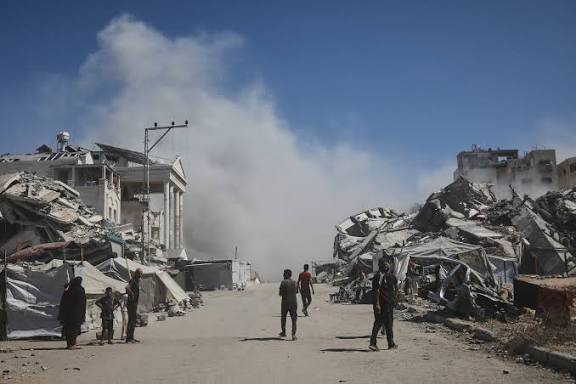
His visit comes as Israeli forces continue to level residential buildings in Gaza City, forcing thousands of people to flee in anticipation of a ground offensive.
Rubio emphasized that President Trump’s priority is still the return of hostages and finding a path toward ending the war. The strike in Doha targeted Hamas officials who had been engaged in ceasefire talks. Asked about Qatar’s role moving forward, Rubio noted that the Gulf state “has been a good partner on a number of fronts.”
Qatar is preparing to host an emergency Arab-Islamic summit to decide its next steps. Officials there denounced Israel’s action as a violation of international law, while Israeli leaders defended it as necessary to target Hamas commanders linked to the October 7 attacks.
Meanwhile, families of Israeli hostages continue to accuse Prime Minister Benjamin Netanyahu of standing in the way of a deal to bring their loved ones home.
On the ground in Gaza, the devastation is mounting. Recent airstrikes have destroyed dozens of residential buildings, and footage has shown entire towers collapsing under bombardment. Israel has said the strikes targeted Hamas infrastructure, but the destruction has forced hundreds of thousands from their homes.
Many families remain trapped—some unable to afford to leave, others unwilling to move south where Israeli strikes have also taken place. “The bombardment intensified everywhere. We packed up our tents with dozens of other families. We don’t know where to go,” said one displaced resident.
Hospitals in Gaza reported receiving the bodies of dozens killed in the latest attacks. Since a famine was declared in Gaza City in late August, local authorities say more than a hundred people have already died from starvation and malnutrition. Israel disputes those figures but says it is expanding aid delivery efforts.
The war began after the Hamas-led assault on southern Israel on October 7, which killed about 1,200 people and saw more than 250 hostages taken. Since then, tens of thousands have been killed in Gaza during Israeli operations, according to local health officials.