
A senior United Nations official has issued a stark warning about the potential for “catastrophic consequences
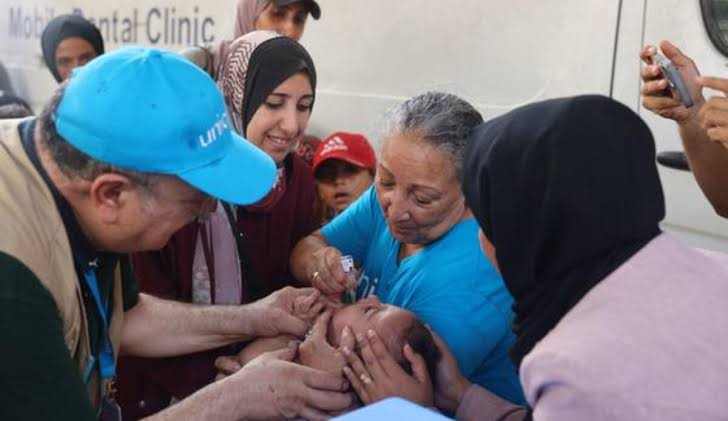
A senior United Nations official has issued a stark warning about the potential for “catastrophic consequences” if Israel moves forward with plans to expand its military operations across the entire Gaza Strip. The warning came amid reports that Israeli leadership is considering a full reoccupation of Gaza.
The UN representative expressed deep concern over what such a move could mean—not just for the millions of Palestinians still living in the region, but also for the remaining Israeli hostages believed to be held by Hamas.
Israeli leadership is expected to meet soon to decide whether to press ahead with what one official reportedly called the “full conquest” of Gaza and the defeat of Hamas. Some believe the plan may be a strategic move—either to pressure Hamas into negotiations or to strengthen political backing from more hardline members of Israel’s ruling coalition.
When asked for an opinion on the reoccupation, the U.S. President said that the decision rests entirely with Israel.
International concern continues to grow over the humanitarian situation in Gaza. According to the UN official, any further military expansion would likely worsen the suffering of civilians and could put hostages in even greater danger. He emphasized that under international law, Gaza should remain part of a future Palestinian state.
Currently, Israel claims to have operational control of about three-quarters of Gaza. However, the proposed plan would see forces take over all remaining territory—home to over two million people. The proposal has already stirred controversy, even within Israel, with senior military figures reportedly opposing the idea. In response, a government insider suggested that any military leader not on board should step down.
Meanwhile, hostage families have voiced growing fear that a full military takeover would reduce the chances of their loved ones being brought home alive. Israel says 49 hostages remain in Gaza, though 27 of them are presumed dead.
The UN official repeated calls for a ceasefire and demanded the immediate, unconditional release of all hostages. He also urged Israel to allow the free flow of humanitarian aid, describing current access as severely restricted and the assistance entering Gaza as “grossly inadequate.”
He highlighted the dire conditions faced by Palestinians—conditions he described as inhumane and squalid. Violence has also erupted at food distribution sites, where more than 1,200 people have reportedly been killed since late May while attempting to access supplies.
Health authorities in Gaza have said that since October of the previous year, 154 people—including 89 children—have died due to extreme hunger. In just the last month, at least 63 deaths have been linked to malnutrition, according to UN-backed agencies, which are calling the crisis a case of man-made mass starvation.
Israel has consistently denied that there are restrictions on humanitarian aid or that starvation is occurring, insisting that food deliveries are allowed.
The ongoing conflict began when Hamas launched a deadly attack on southern Israel in October 2023, resulting in the deaths of about 1,200 people and the capture of over 250 hostages. In response, Israel launched a military campaign that has, according to local health reports, led to the deaths of more than 60,000 Palestinians.
Despite the enormous toll, tensions continue to rise, and debate over future military strategy remains fierce—both within Israel and internationally.