
Trump to Impose 30% Tariff on EU and Mexico Imports Starting August
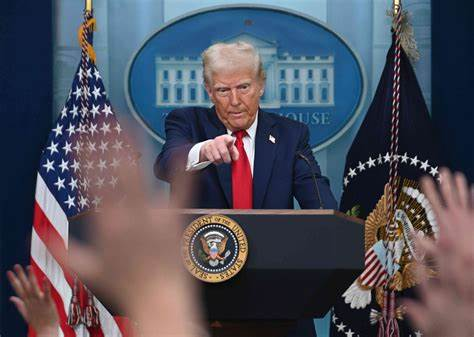
US President Donald Trump has declared that starting August 1, a 30% tariff will be placed on goods imported from the European Union and Mexico. He issued a stern warning that if either party responds with retaliatory tariffs, the US would hike the rate even higher.
The EU, a major trading partner of the United States, had earlier expressed hope for a resolution before the new tariffs come into effect. In his communication to European officials, Trump cited years of trade deficits and claimed the relationship was unbalanced due to the EU’s tariffs and trade barriers.
Mexico also received a warning letter from Trump, in which he criticized the country for not doing enough to combat drug trafficking across North America. Although he acknowledged some efforts by Mexico to assist with border control, he insisted they fell short of expectations.
The announcement comes on the heels of Trump’s broader push to overhaul trade relationships. Similar tariff measures are set to be imposed on Japan, South Korea, Canada, and Brazil, as well as several smaller trade partners. Canada, in particular, faces a potential 35% tariff under the same initiative.
European leaders voiced concern over the move. Italy’s prime minister expressed hope for a fair resolution, while the Dutch prime minister emphasized the importance of EU unity. Germany’s auto industry warned of rising costs and potential fallout for manufacturers.
The EU said it remained open to negotiations and was prepared to take proportional action if necessary to protect its interests.
Meanwhile, there was no clarity on whether Mexico’s goods traded under the 2020 United States-Mexico-Canada Agreement would be exempt. Canada has reportedly received confirmation that its agreement terms would apply.
Trump’s administration has now proposed tariff changes affecting 24 countries and the EU. There’s also a broader plan to finalize 90 trade deals in 90 days, with preliminary progress reportedly made with the United Kingdom and Vietnam.
This aggressive trade strategy continues to stir debate globally about its long-term economic consequences and the potential for a full-scale trade conflict.