Netanyahu Meets Trump in Washington Amid Renewed Push for Gaza Ceasefire
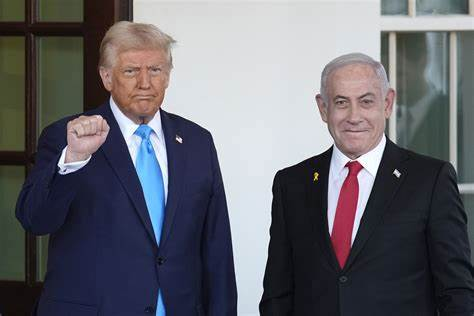
After nearly two years of war in Gaza, hopes are rising for a breakthrough as Israeli Prime Minister Benjamin Netanyahu visits Washington to meet with U.S. President Donald Trump. Ahead of the meeting, Trump expressed confidence that a ceasefire deal could be reached this week, saying he had been “very firm” with Netanyahu about ending the conflict.
Speaking before boarding his flight, Netanyahu said he believed the meeting could help finalize the long-discussed ceasefire. Talks between Israel and Hamas resumed in Qatar on Sunday, focusing on a U.S.-backed proposal for a 60-day truce and a phased release of hostages.
Despite the diplomatic efforts, the path to agreement remains uncertain. People in Gaza, still facing daily bombardments and dire living conditions, have little faith that the conflict will truly end.
“I don’t want a temporary pause—I want the war to stop completely,” said Nabil Abu Dayah, who fled northern Gaza with his family. “We’re exhausted. We’ve been displaced again and again. There’s no water, no food, no shelter. We’re just surviving.”
In Israel, families of hostages held by Hamas continue to pressure the government to accept a deal. At a recent rally, relatives called for the immediate return of all captives. “This is the moment to act,” said Ilay David, whose brother, a musician, remains in captivity. “Every hostage must come home. Every single one.”
This is Netanyahu’s third visit to Washington since Trump returned to office, but their first since a brief war between Israel and Iran ended in a brokered truce. That recent conflict appears to have shifted the political climate, possibly paving the way for progress in Gaza.
Public support in Israel for ending the war is growing, especially after recent casualties among soldiers. Netanyahu, facing strong opposition from far-right political partners who want Israel to maintain control over Gaza, may now be in a stronger position to push through a ceasefire deal.
The proposal under discussion reportedly includes a gradual release of hostages—ten alive and eighteen dead—over five phases, lasting 60 days. In return, Israel would begin withdrawing forces from northern and southern Gaza and allow a significant increase in humanitarian aid.
By Day 10 of the truce, Hamas would provide a list of remaining living hostages and their conditions. Israel would also disclose information about thousands of Palestinians detained during the war. As in previous deals, many of these detainees are expected to be released in exchange.
President Trump has called this the “final” proposal, claiming Israel has agreed to the necessary terms. Hamas has signaled tentative approval but raised concerns about the timeline for troop withdrawals and humanitarian control.
One major sticking point is Hamas’s demand for the end of the controversial Gaza Humanitarian Foundation’s role, pushing instead for relief efforts to return to the oversight of the UN and its partners.
Netanyahu’s office responded by saying those changes were unacceptable. The Israeli leader continues to insist that Hamas must disarm—something the group has consistently refused.
Meanwhile, the humanitarian crisis in Gaza is worsening. Medical teams are reporting severe malnutrition among children. The fuel shortage, ongoing for over four months, is now crippling essential services, including hospitals, water supplies, and telecommunications.
As pressure mounts at home and abroad, Netanyahu faces a critical decision: either proceed with the ceasefire and begin the process of ending the war—or prepare for an extended military campaign that could involve reoccupying parts of Gaza.
The outcome of this high-stakes visit to Washington could shape the future of both Israeli and Palestinian lives in the months to come.