Iran Holds Emotional State Funeral for Victims of Israel Conflict
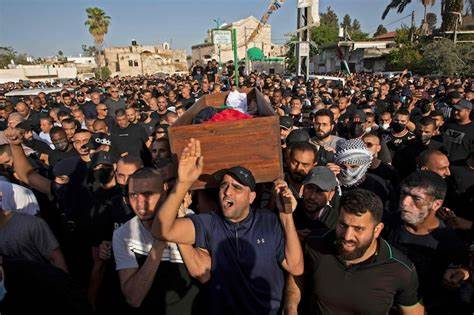
A sea of mourners filled the streets of central Tehran as held a state funeral for around 60 individuals, including high-ranking military officers and nuclear scientists, who were killed during a recent 12-day conflict with Israel.
Coffins wrapped in Iranian flags and bearing portraits of the deceased lined the route near Enghelab Square. Crowds, dressed mostly in black, chanted and waved flags in a solemn show of grief and unity. Among those being honored was Mohammad Bagheri, Iran’s top military official and Chief of Staff of the Armed Forces.
The ceremony also paid tribute to other prominent figures such as Hossein Salami, commander-in-chief of the Revolutionary Guards, and nuclear scientist Mohammad Mehdi Tehranchi, former head of Azad University.
This farewell follows a fragile ceasefire that brought the intense fighting to a pause. The conflict escalated when the United States intervened and launched strikes on Iranian nuclear facilities, dramatically raising tensions.
In the wake of the violence, sharp words have continued to fly. The former U.S. president stated he would not hesitate to order another strike if Iran was found to be enriching uranium at alarming levels. He criticized Iran’s Supreme Leader, accusing him of lying about the outcome of the conflict and claimed to have spared his life despite knowing his exact location.
Iran’s foreign minister strongly pushed back, describing the remarks as disrespectful and warning against further provocations. He insisted that if the former U.S. president genuinely desired diplomacy, he should avoid threatening language and show respect to Iran’s leadership.
Despite official statements dismissing the effectiveness of the strikes, Iranian authorities acknowledged that the damage to key nuclear sites was extensive and serious.
The funeral in Tehran was not only a farewell to the deceased but also a demonstration of resilience from a country deeply affected by loss, war, and international pressure. Though life in the capital is slowly returning to normal, the scars of the conflict are still fresh in the minds of many.