Africa’s Reparations Debate Takes an Environmental Turn With New University of Lagos Report
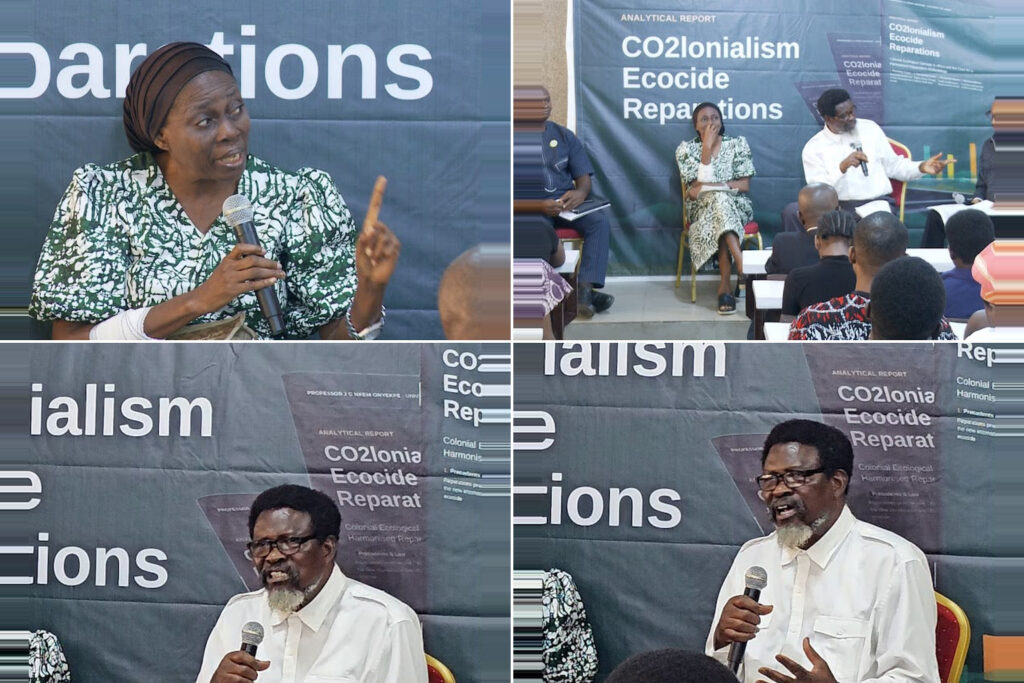
A groundbreaking report unveiled at the University of Lagos has opened a potentially significant new front in Africa’s reparations campaign.
The study argues that the ecological damage caused by British colonial rule constitutes a distinct category of harm, with damages potentially valued in the hundreds of trillions of dollars.
Titled CO2lonialism, Ecocide and Reparations, the report examines the long-term environmental consequences of colonial policies across former African colonies.
It highlights the systematic appropriation of land, natural resources, and energy, demanding that these ecological consequences be subjected to rigorous historical, scientific, and monetary assessment alongside traditional reparations claims.
Presenting the report at the University of Lagos, lead author Professor J. G. Nkem Onyekpe stated that existing approaches to reparations have failed to adequately account for the environmental dimensions of colonial extraction.
According to Onyekpe, comparable large-scale valuation exercises prove that structurally unequal resource appropriation can be effectively monetised.
He cited a peer-reviewed 2022 estimate that valued resources appropriated from the Global South through unequal exchange at more than $10 trillion in 2015 alone.
Extending a similar scientific analysis across the entire duration of colonial rule could push the final valuation into the hundreds of trillions of dollars.
Adding a geographic perspective, Professor Nnagugwu Oscar Uluocha, Professor of Geography at the University of Lagos, described the ecological damage inflicted on Nigeria during British colonial rule as “colossal.”
He emphasised the urgent need to evaluate colonial land-use, agricultural, and resource-extraction policies using hard scientific evidence and modern environmental analysis.
The panel also directly addressed the legal hurdles of seeking retroactive environmental justice. Dr. Asikia Karibi-Whyte, an expert in jurisprudence and international law, challenged the conventional defense that present-day governments cannot be held responsible for the wrongdoings of their predecessors.
Karibi-Whyte argued that the United Kingdom is recognised in international law as a continuing state entity, regardless of changes in its government, political leadership, or the passage of time.
To support her argument, she pointed to the historic Nauru case before the International Court of Justice (ICJ). In that case, the formerly colonised island nation of Nauru successfully brought a claim against its former colonial administrator for the environmental devastation caused by colonial-era phosphate mining, creating a powerful precedent for African nations.
The report argues that environmental repair must now form an integral part of the broader African reparations framework.
The authors note that the timing is critical: the emerging international conversation around “ecocide,” paired with the African Union’s decision to examine the massive destruction of ecosystems as a crime, creates a perfect opportunity for an African-led approach to ecological reparations.
To turn this research into policy, the report has already been formally submitted to the African Union’s AUCER and AULER committees for consideration. If adopted, it could fundamentally reshape diplomatic and financial dialogues between African nations and former colonial powers.
- Africa reparations campaign, African environmental reparations, African Union reparations committees, British colonial environmental damage, CO2lonialism Ecocide and Reparations, colonial land use policies, colonial resource extraction, ecocide African Union, ecological reparations Africa, environmental justice Nigeria, MDNTV, mdntvlive, mdntvnews, Nauru ICJ case, Professor J G Nkem Onyekpe, University of Lagos colonial report